5,009 people live in British Properties, where the median age is 44 and the average individual income is $205,179. Data provided by Statistics Canada.
Total Population
Median Age
Population Density Population Density This is the number of people per square mile in a neighborhood.
Average individual Income
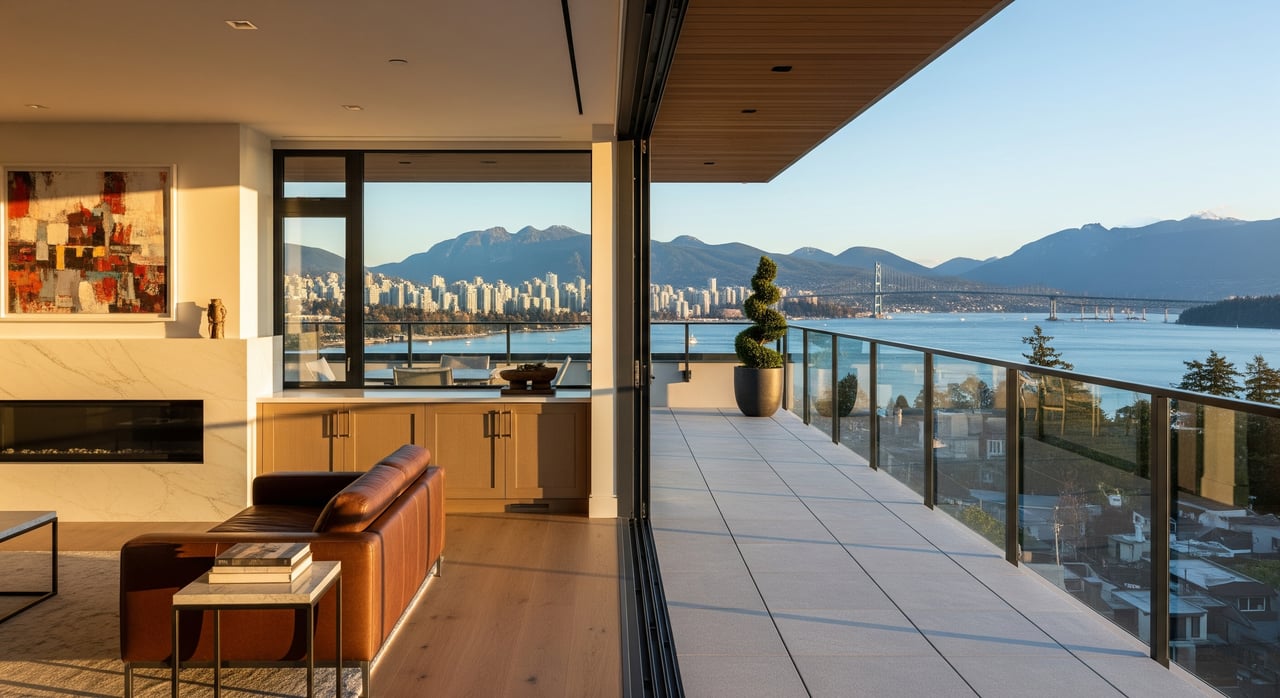
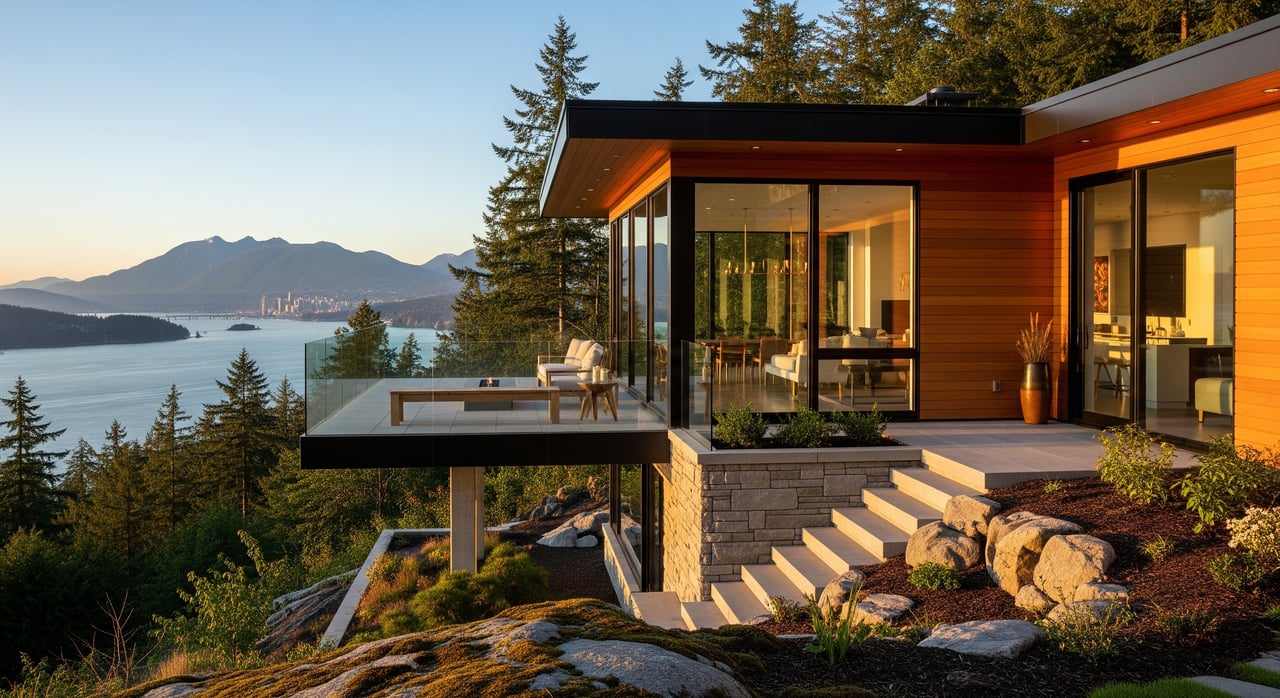
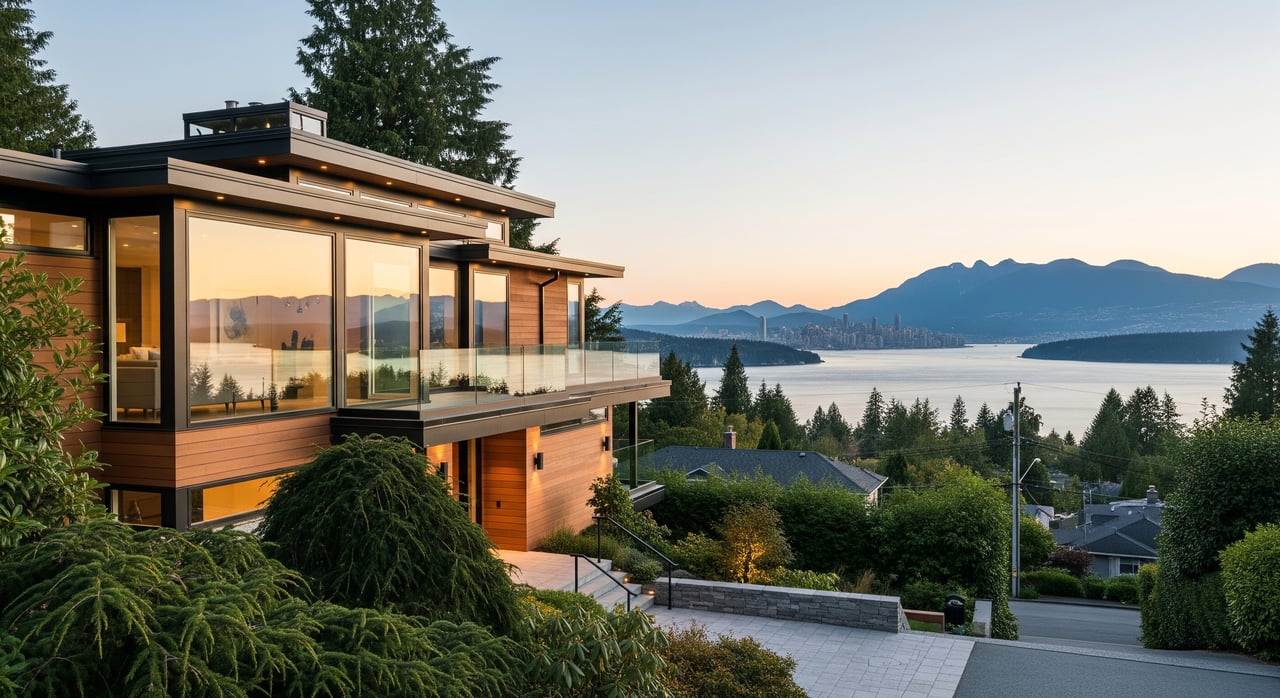
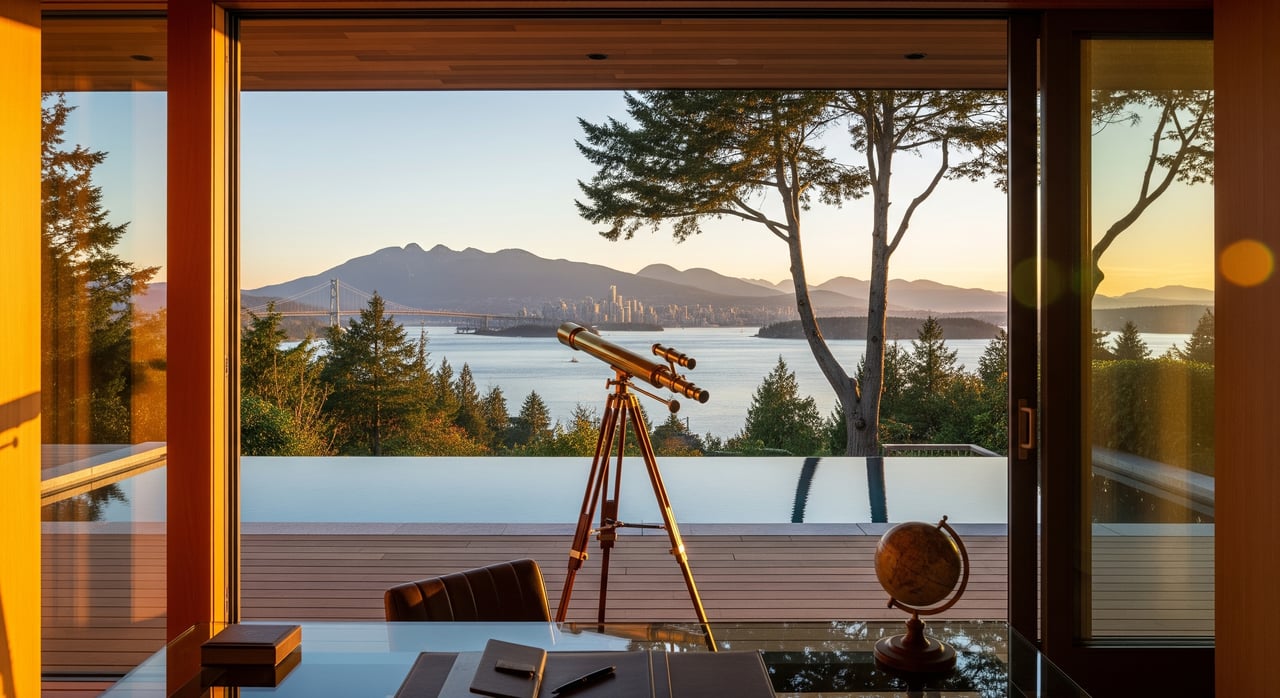
Few addresses in Canada carry the weight of the British Properties. Perched on the forested southern slope of Hollyburn Mountain, it is the neighborhood people picture when they imagine West Vancouver at its most rarefied: winding roads that disappear into old-growth cedar, gated estates set back behind long private drives, and living rooms framed around a permanent view of the downtown skyline, the Lions Gate Bridge, and the Pacific beyond.
But the British Properties is more than a collection of expensive homes. It is a nearly century-old experiment in luxury master planning—one that deliberately traded the efficient street grid for curves that follow the mountain, that preserved dense forest between lots instead of clearing it, and that anchored an entire community around golf, nature, and privacy rather than commerce. Understanding that intent is the key to understanding whether this neighborhood is right for you, and it's the lens this guide uses throughout.
The story begins, improbably, with the Great Depression. By the early 1930s the municipality of West Vancouver was teetering toward bankruptcy, and its rescue came from an unlikely source: a consortium of British investors led by the Guinness family, the Irish brewing dynasty. Operating as British Pacific Properties Ltd., they acquired roughly 4,000 acres of rugged, largely inaccessible hillside for $75,000, pledging a million dollars in infrastructure to make it livable.
What they built was not a subdivision but a landscape. The developers hired the Olmsted Brothers—the Boston firm whose founder designed New York's Central Park—to lay out the community. Rather than impose a grid on the mountain, the Olmsteds designed curvilinear streets that traced its natural contours, a decision that still defines the look and feel of the neighborhood today.
The genius of the plan was solving its own biggest problem: access. To connect this isolated slope to downtown Vancouver, the Guinness family financed and built the Lions Gate Bridge, which opened in 1938. A year earlier, they had anchored the community's prestige with the Capilano Golf & Country Club. In 1950, at the base of the mountain, they opened Park Royal—Canada's first covered shopping mall.
It's worth being honest about the neighborhood's early history. Like many upscale developments of that era, the British Properties originally carried racial and religious covenants on its titles designed to exclude non-white and Jewish residents. Canadian law long ago rendered those covenants illegal and unenforceable, and the neighborhood today is profoundly different from its origins: multicultural, internationally connected, and home to affluent families from around the world—particularly East Asian and Iranian communities who have shaped its modern character.
The British Properties occupies the south-facing slope of Hollyburn Mountain in West Vancouver, sitting directly above the waterfront villages of Ambleside and Dundarave. That elevation is the whole point—it's what delivers the sweeping sightlines over Burrard Inlet and the city.
Because the neighborhood grew organically over almost a hundred years, its edges are drawn by geography and infrastructure rather than tidy survey lines. The southern boundary sits just above the Upper Levels Highway (Highway 1), which acts as a clear dividing line between the elevated Properties and the beachside neighborhoods below. To the east lies the dramatic Capilano River Canyon and the District of North Vancouver border. The western reach extends past Taylor Way toward the slopes above Cypress Creek and upper Dundarave. And to the north, the residential zone climbs into newer ultra-luxury subdivisions—Whitby Estates, Rodgers Creek, and the Uplands—before giving way to the protected forest of Cypress Provincial Park.
This is one of the most exclusive residential markets in the country, and it behaves accordingly. Homes here trade less like houses and more like international assets, which means the usual rules of thumb about pricing and pace don't fully apply.
Entry into the neighborhood generally starts well into the multi-million-dollar range. Detached homes commonly fall between roughly $2.5 million and $5 million, while premier legacy estates, custom modern builds, and properties with unobstructed city-and-ocean view corridors climb past $10 million and, at the top of the market, well beyond $20 million.
The rhythm of the market rewards patience. Given the price bracket, it tends to favor buyers, with healthy inventory, modest sales velocity, and homes often sitting 40 to 50 days on the market. Deals are frequently negotiated privately, and buyers here move deliberately, prioritizing long-term fit over urgency.
One dynamic worth understanding is that a meaningful share of transactions are effectively land sales. An older mid-century home on a half-acre-plus lot with a world-class view is often purchased not to live in, but to replace—torn down and rebuilt as a custom estate. In much of the British Properties, the value is in the dirt.
The buyer profile reflects that reality: ultra-high-net-worth individuals, corporate executives, and international investors, drawn by privacy, safety, and proximity to some of Canada's best schools.
Because the neighborhood developed in distinct waves, a drive through it reads almost like an architectural timeline. Three broad eras stand out.
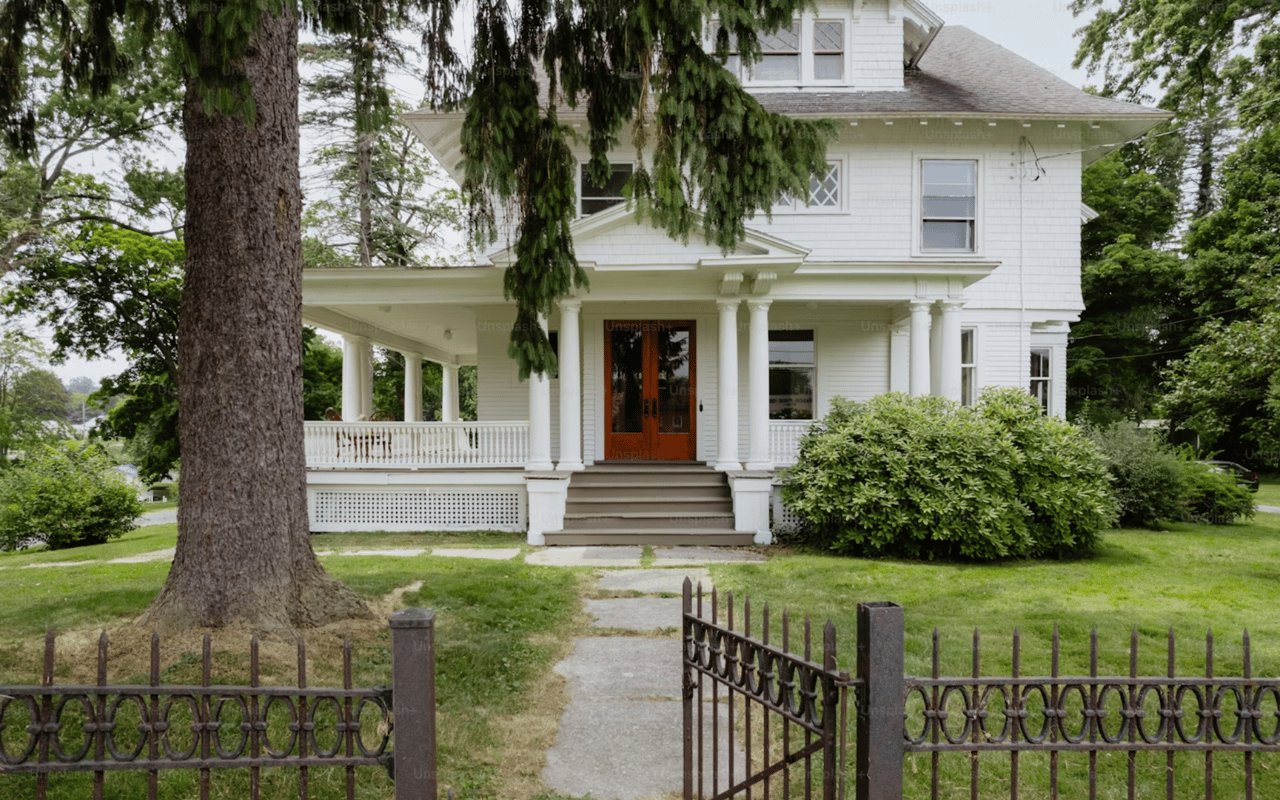
The legacy homes of the 1930s to 1950s reflect the tastes of the original British investors—Tudor Revival and British Arts and Crafts houses with steep gabled roofs, decorative half-timbering, stone chimneys, and leaded glass, built to evoke English country estates. As the area expanded after the war, sprawling single-story ranchers followed, spreading generously across wide lots.
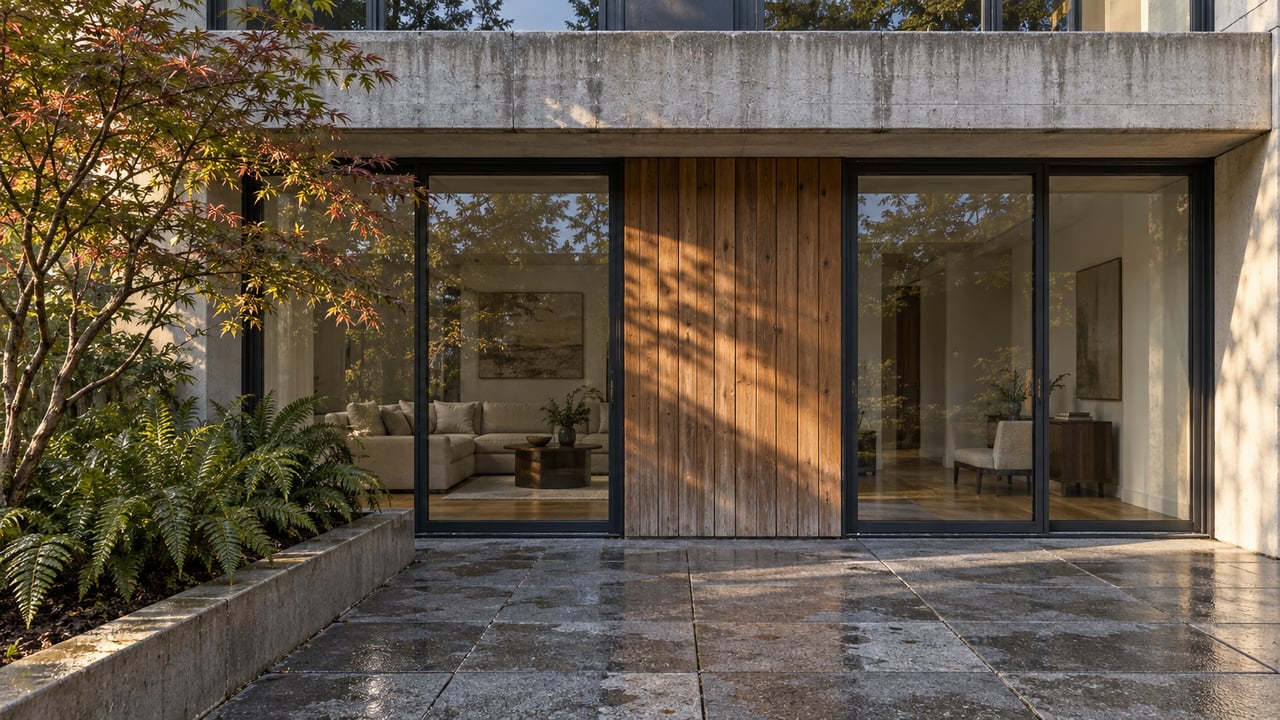
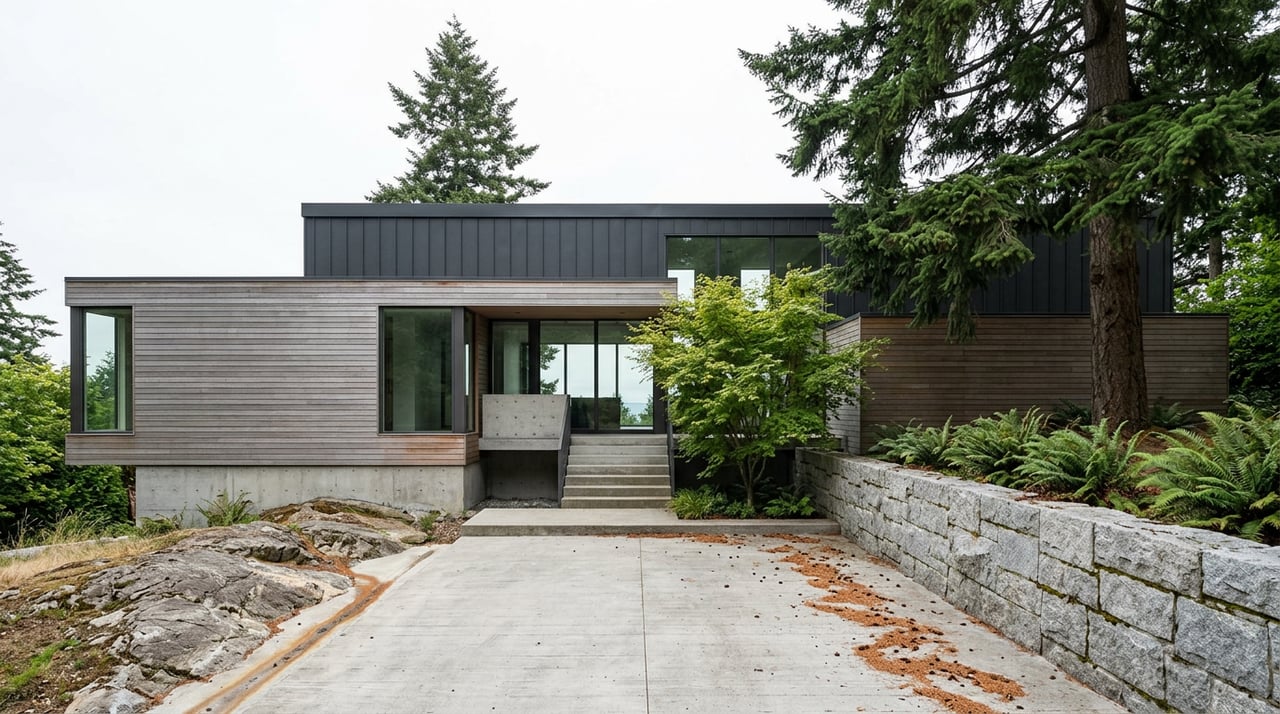
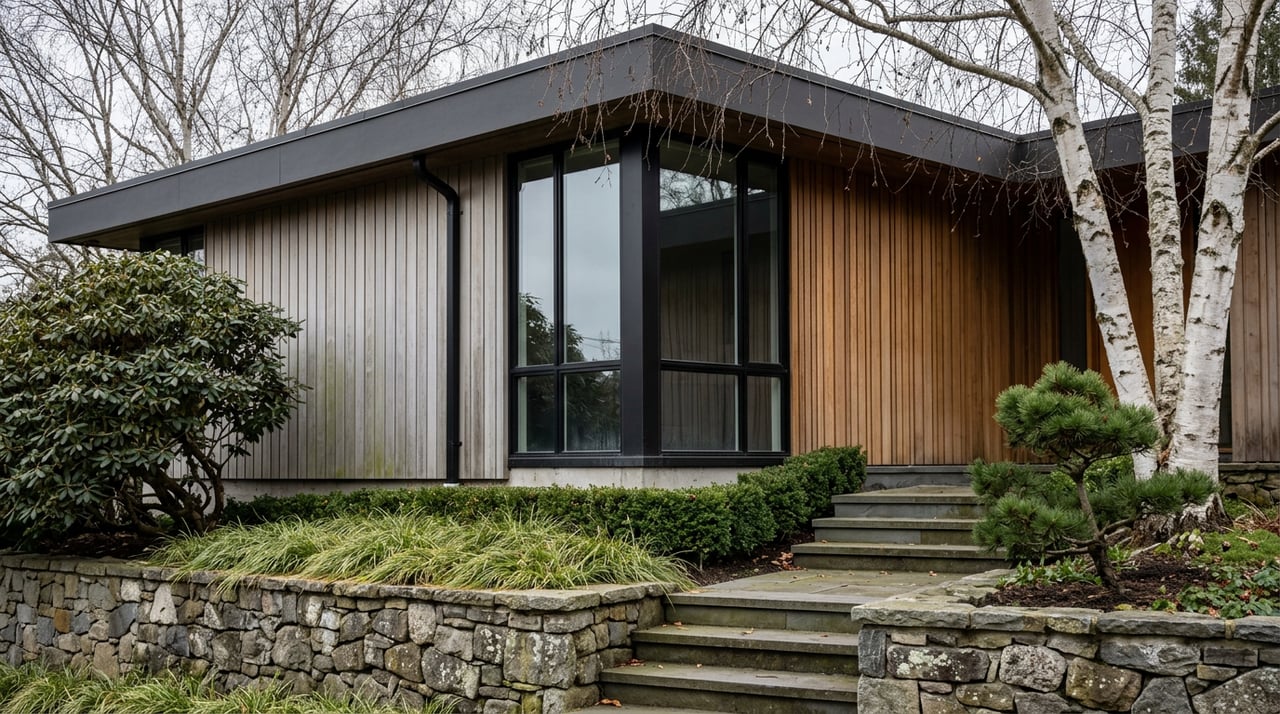
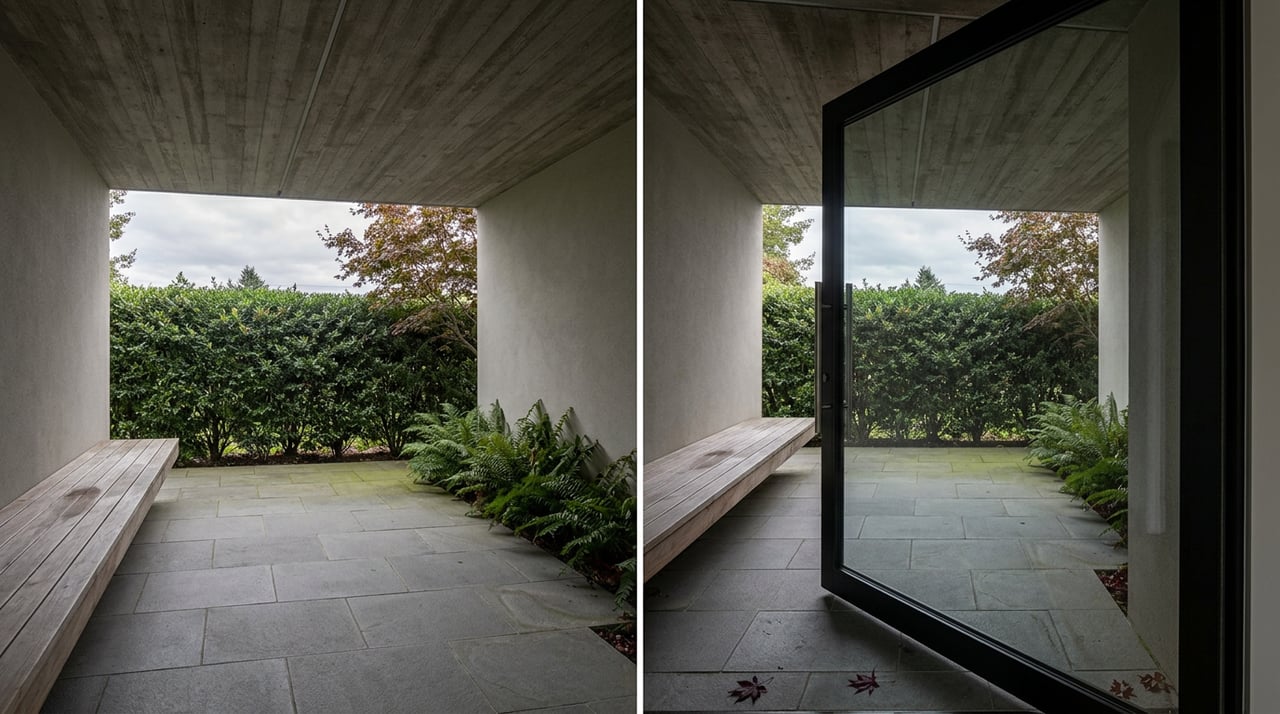
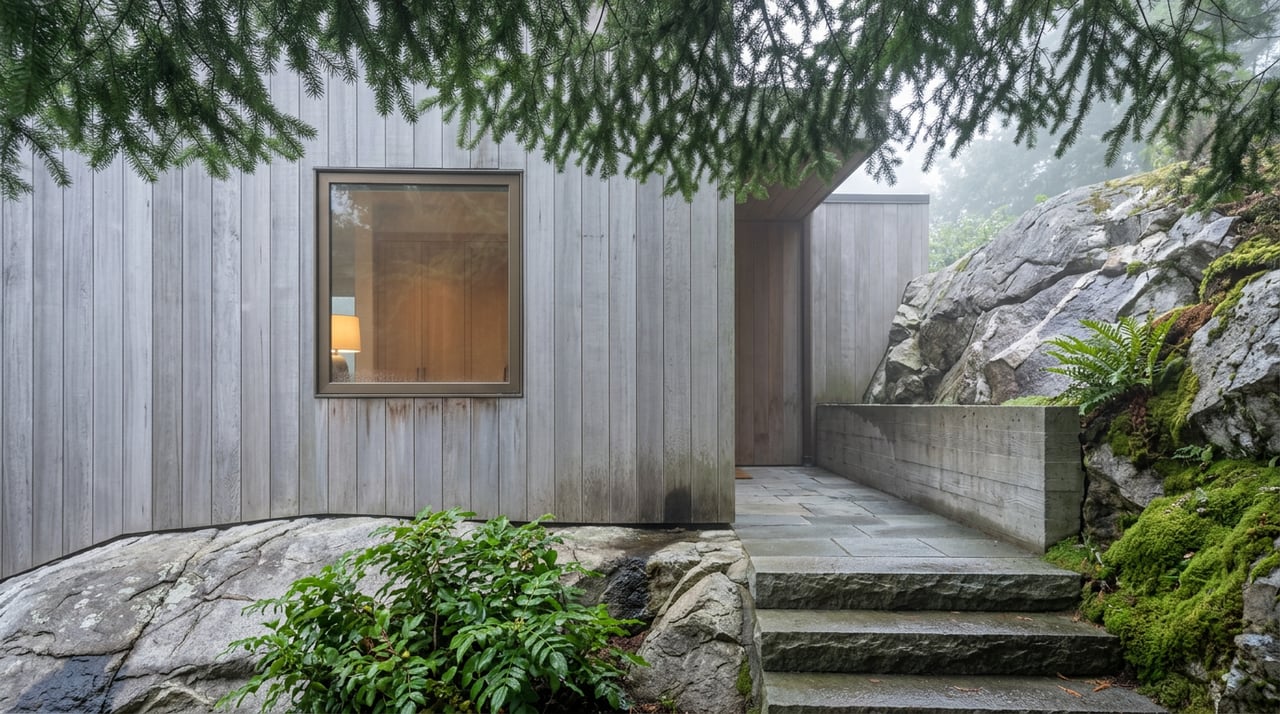
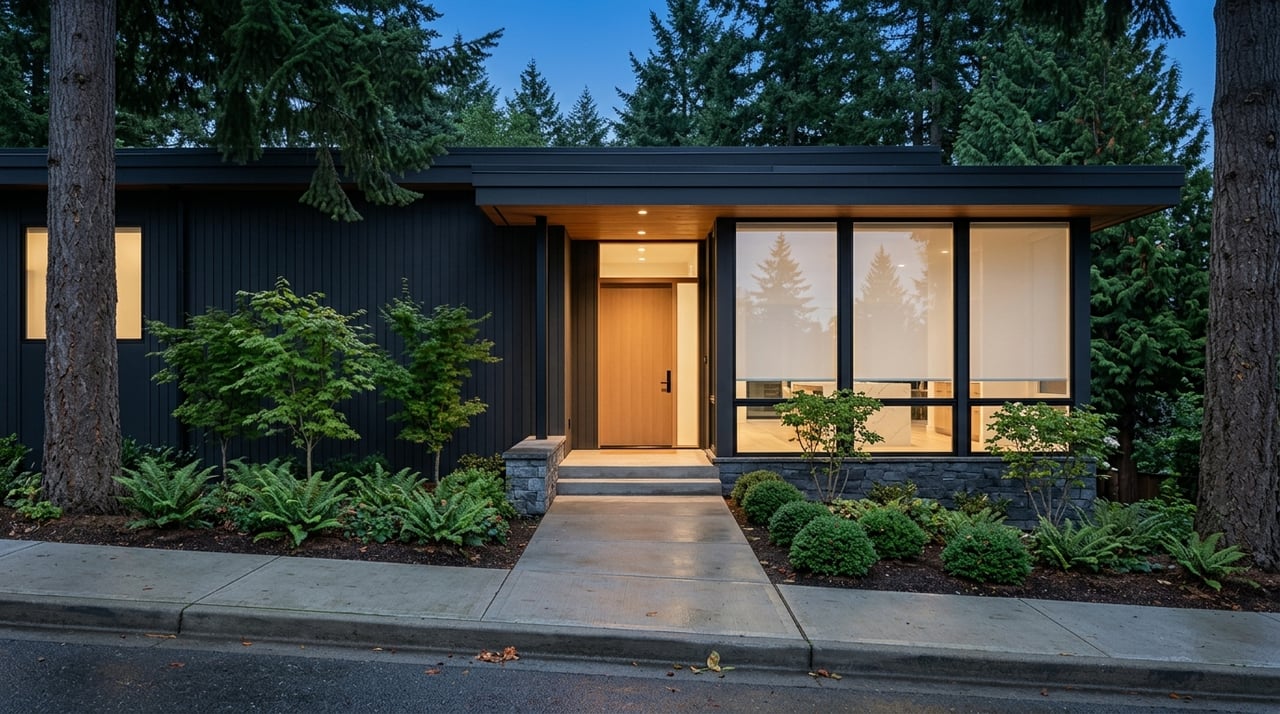
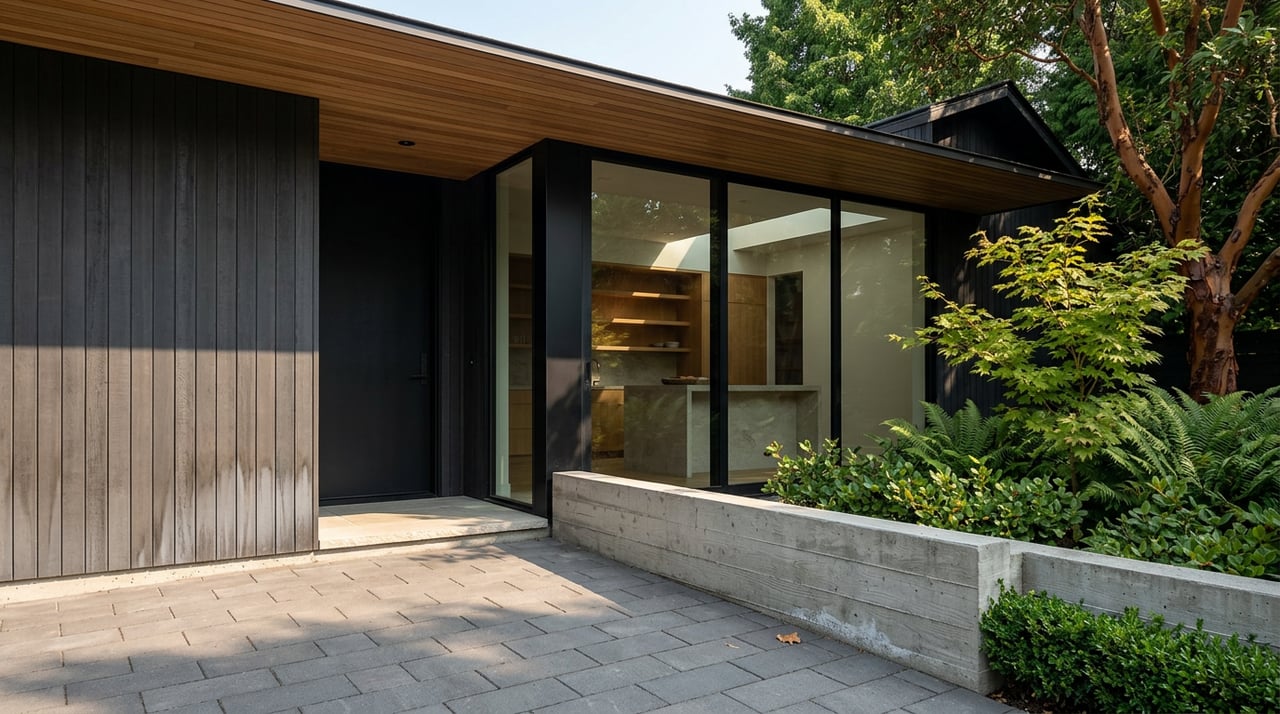
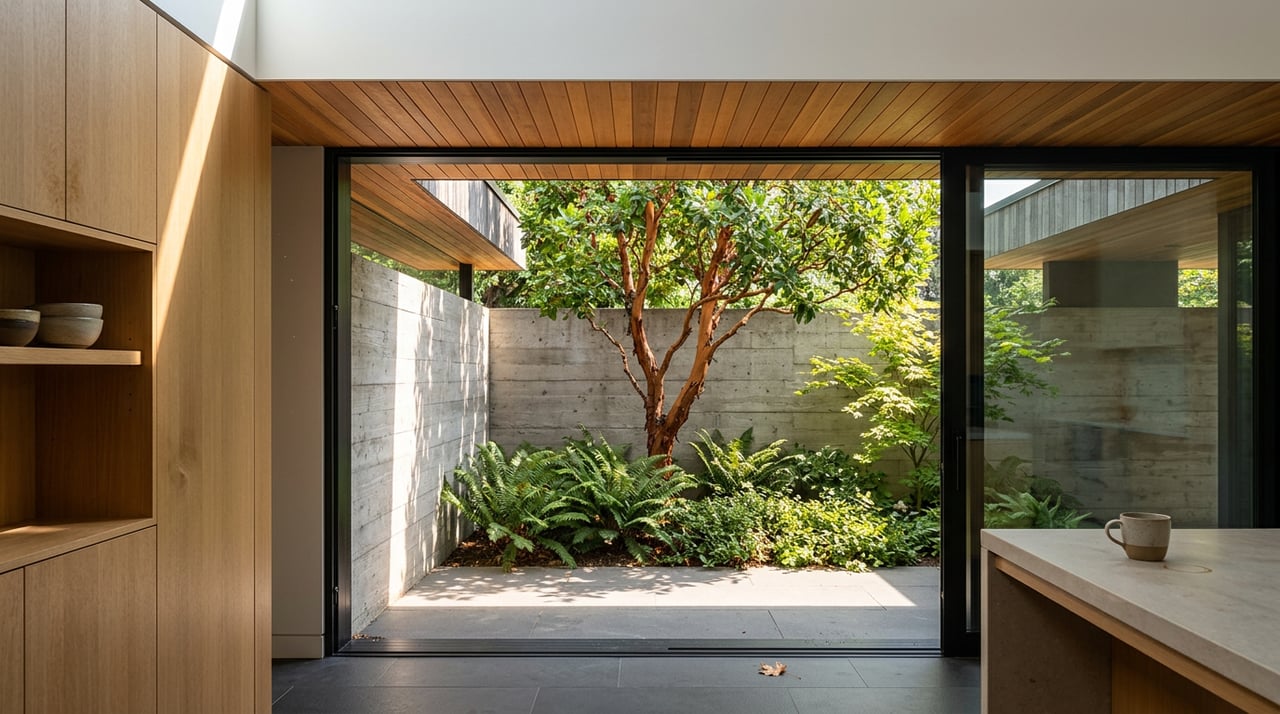
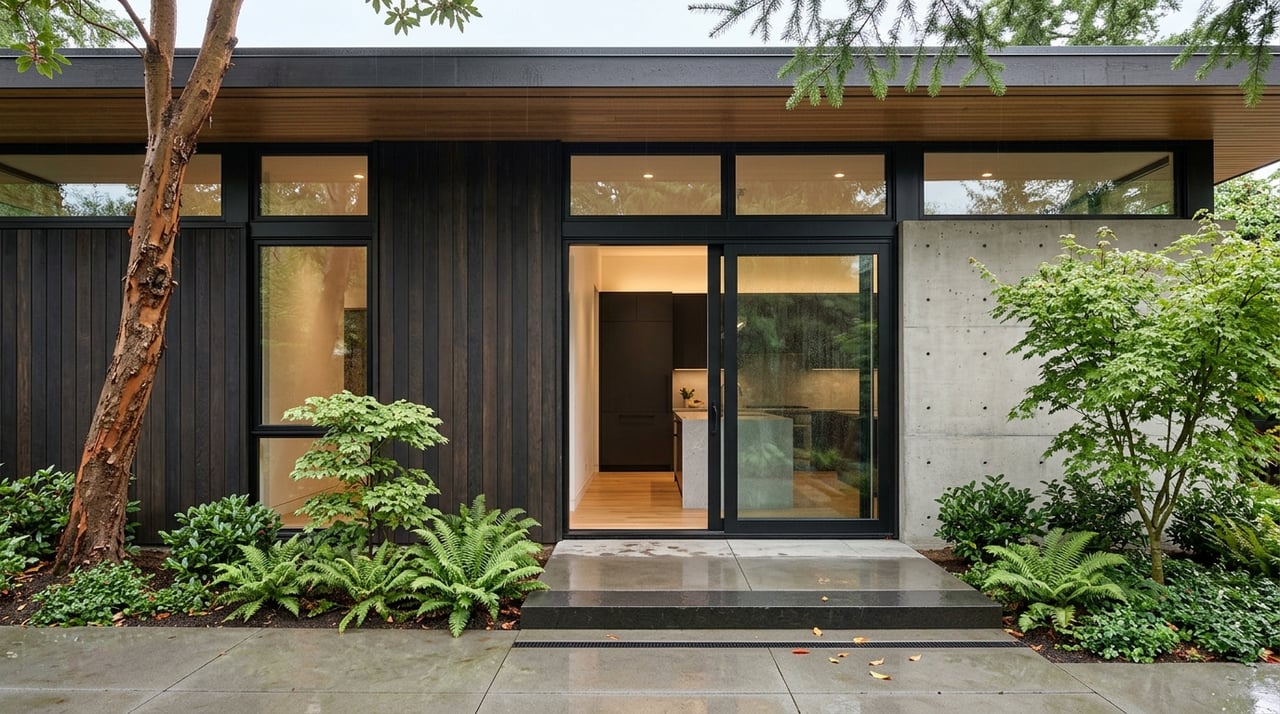
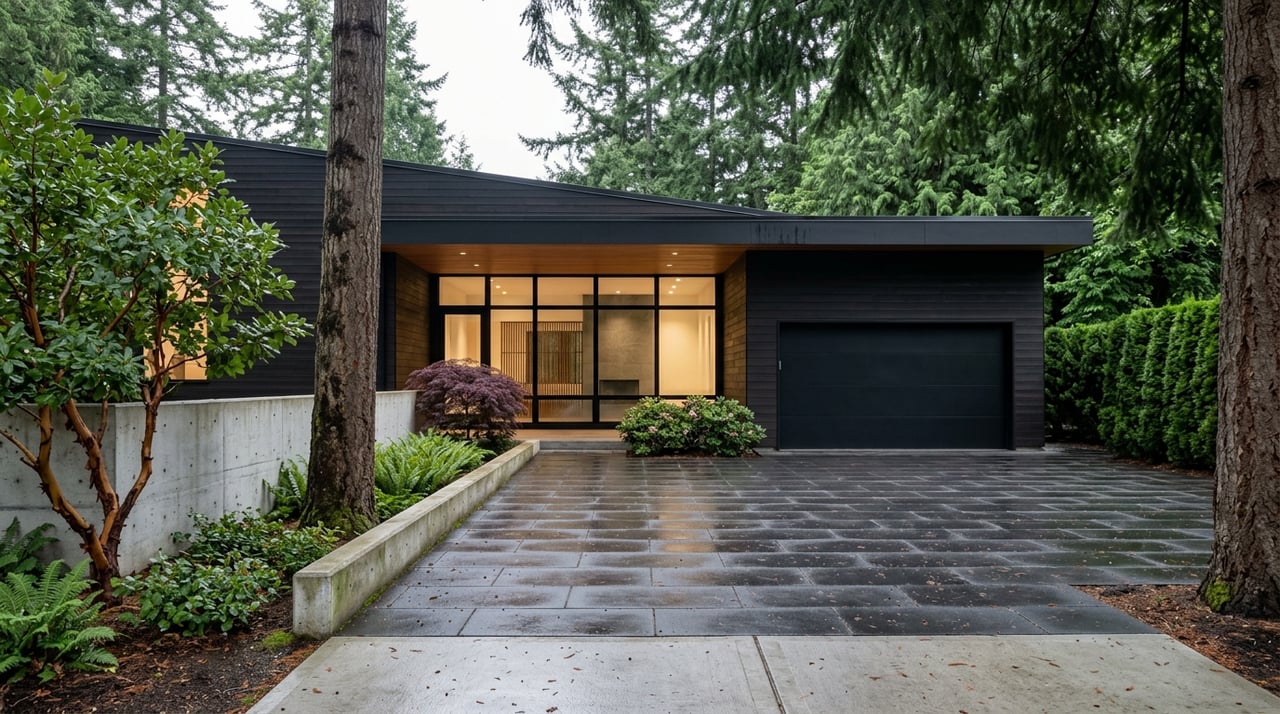
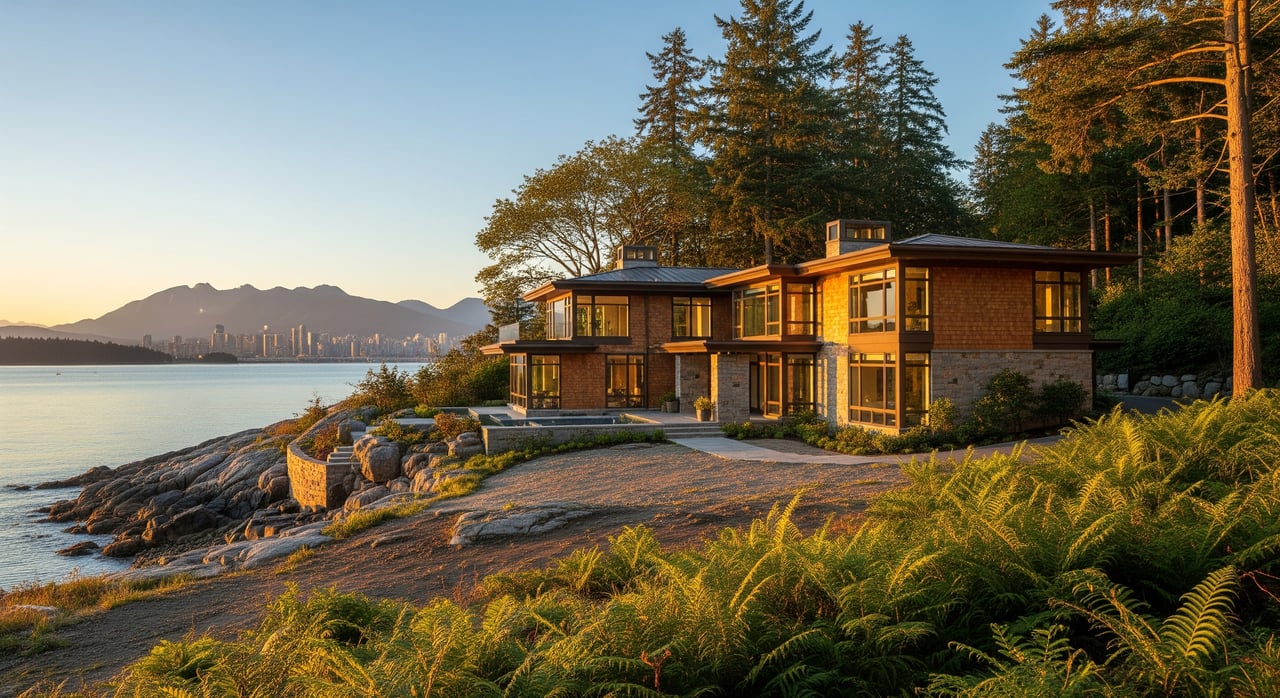
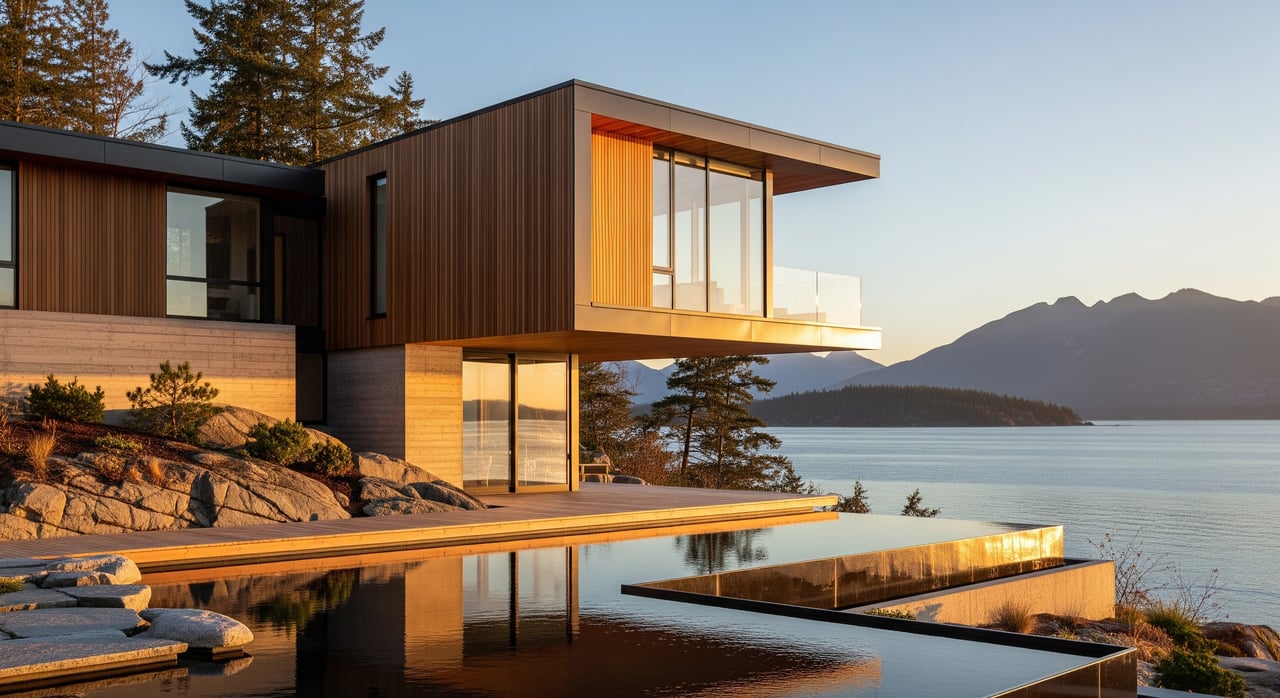
The middle era is the neighborhood's most architecturally significant. West Vancouver was the birthplace of West Coast Modernism, and from the 1950s through the mid-1970s, architects like Arthur Erickson, Ned Pratt, and Fred Hollingsworth designed homes engineered to work with the steep terrain rather than against it. Flat or low-sloped roofs, exposed post-and-beam timber, unpainted cedar, local granite, and vast floor-to-ceiling glass created a seamless dialogue between the living space and the rainforest outside. These are the homes that made the region famous among architects worldwide.
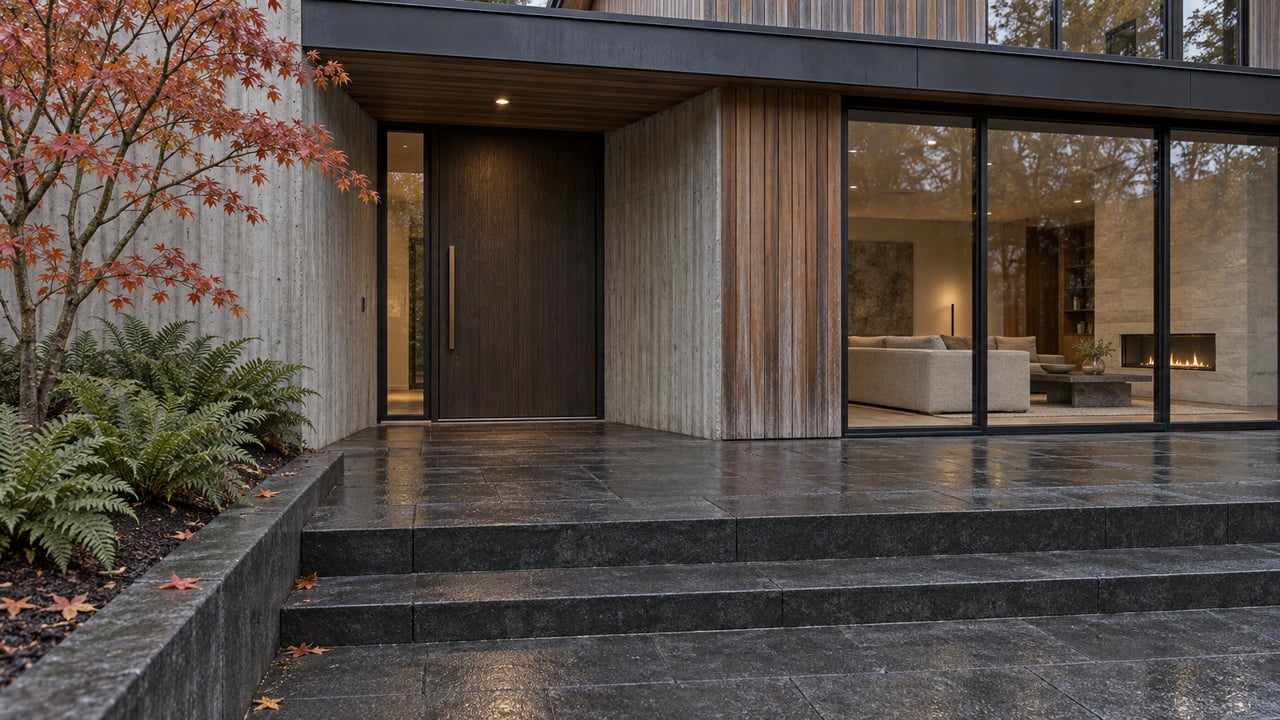
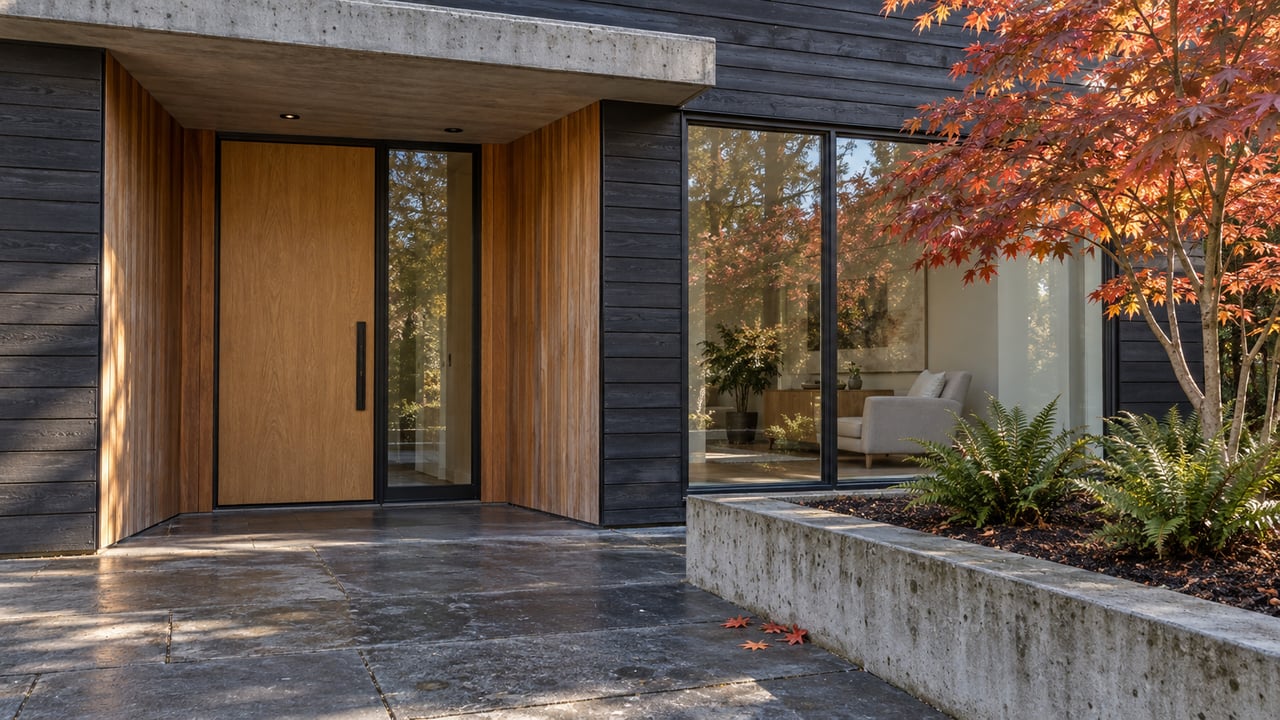
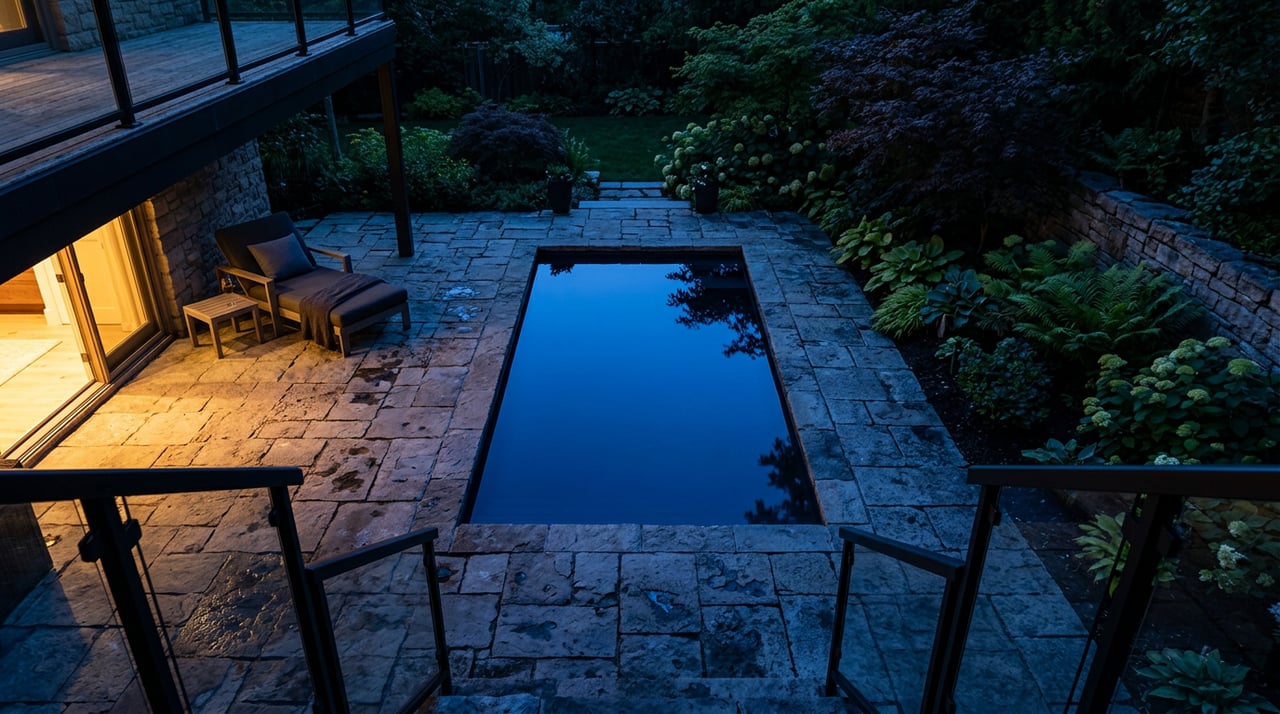
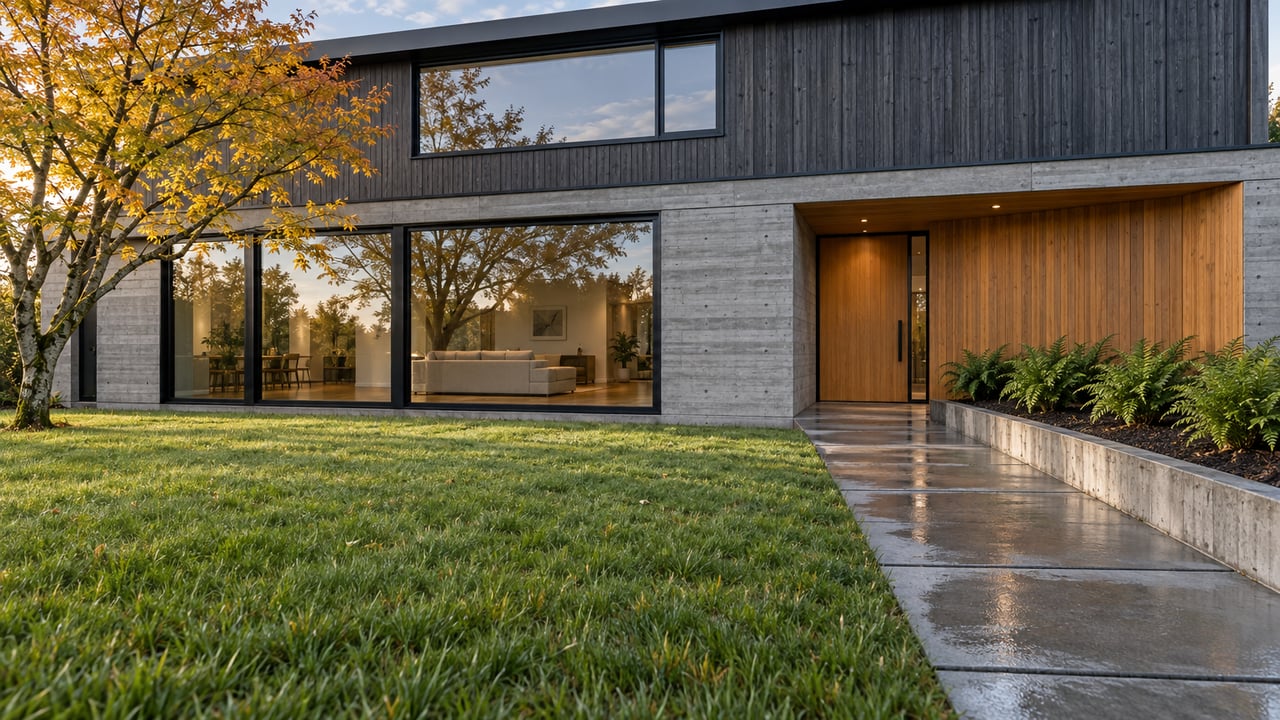
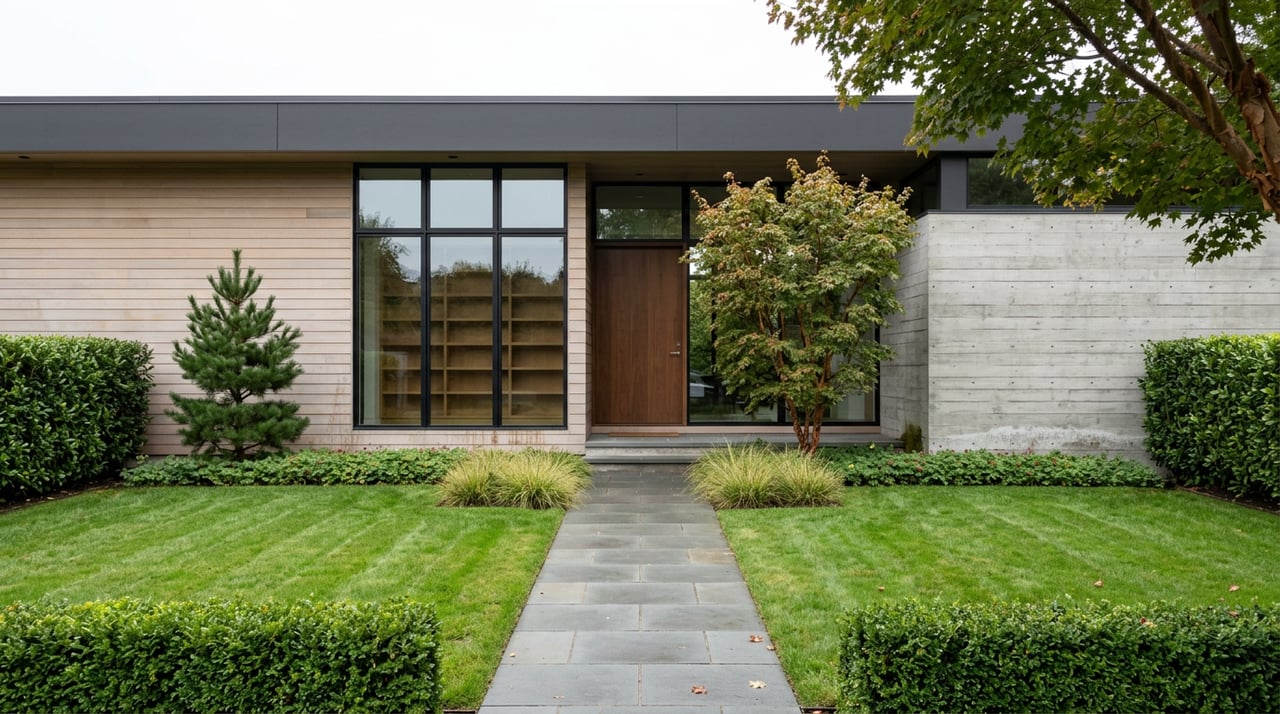
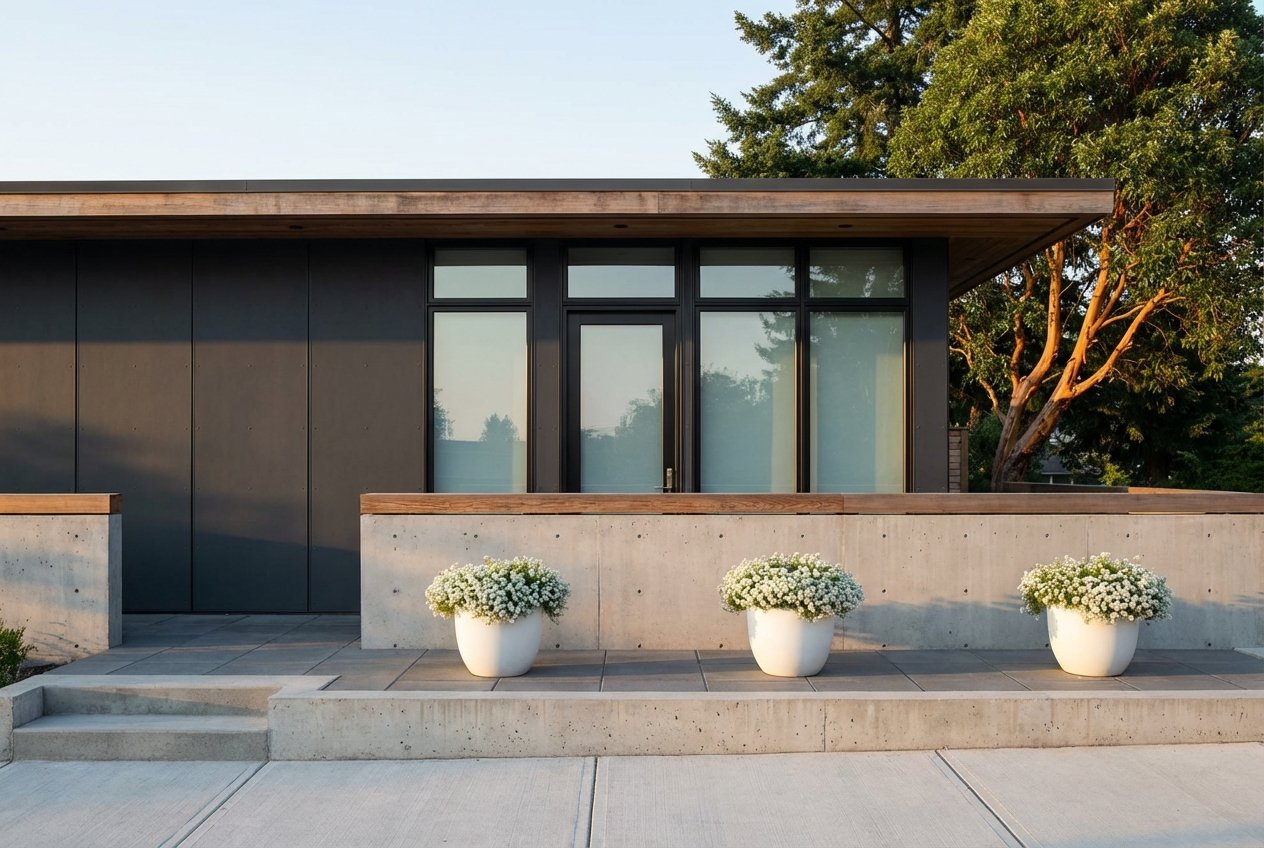
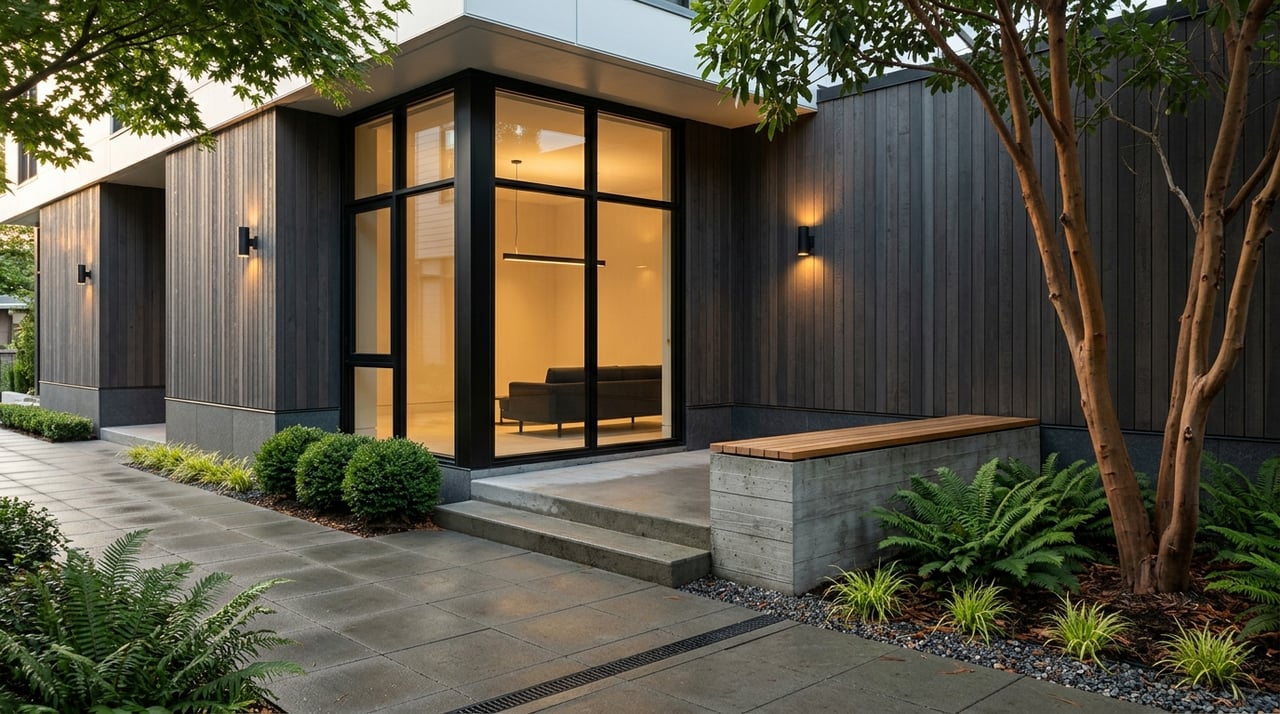
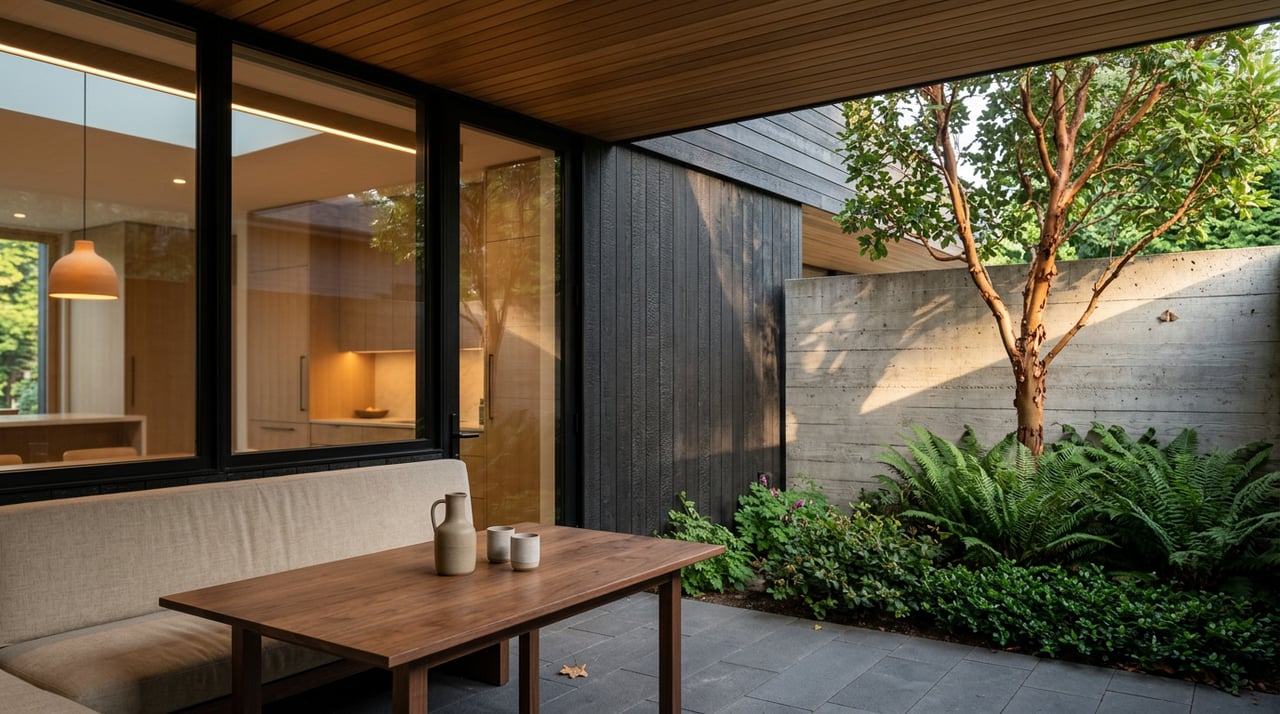
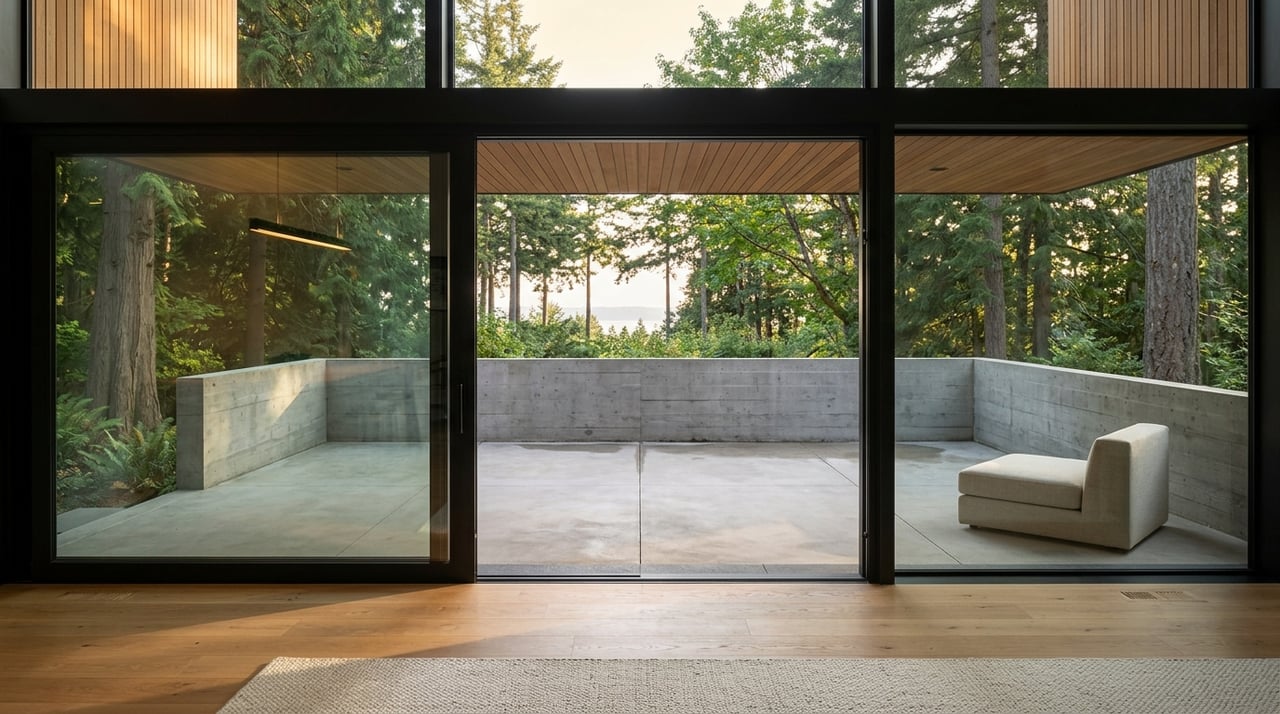
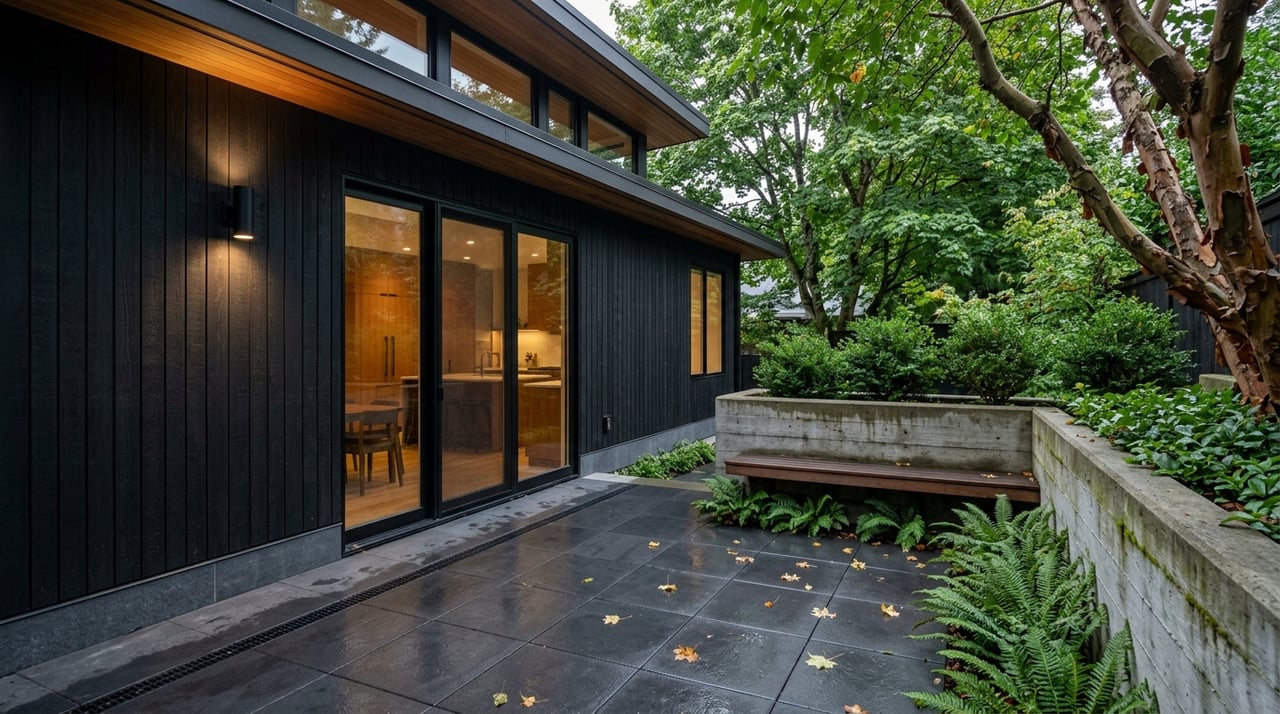
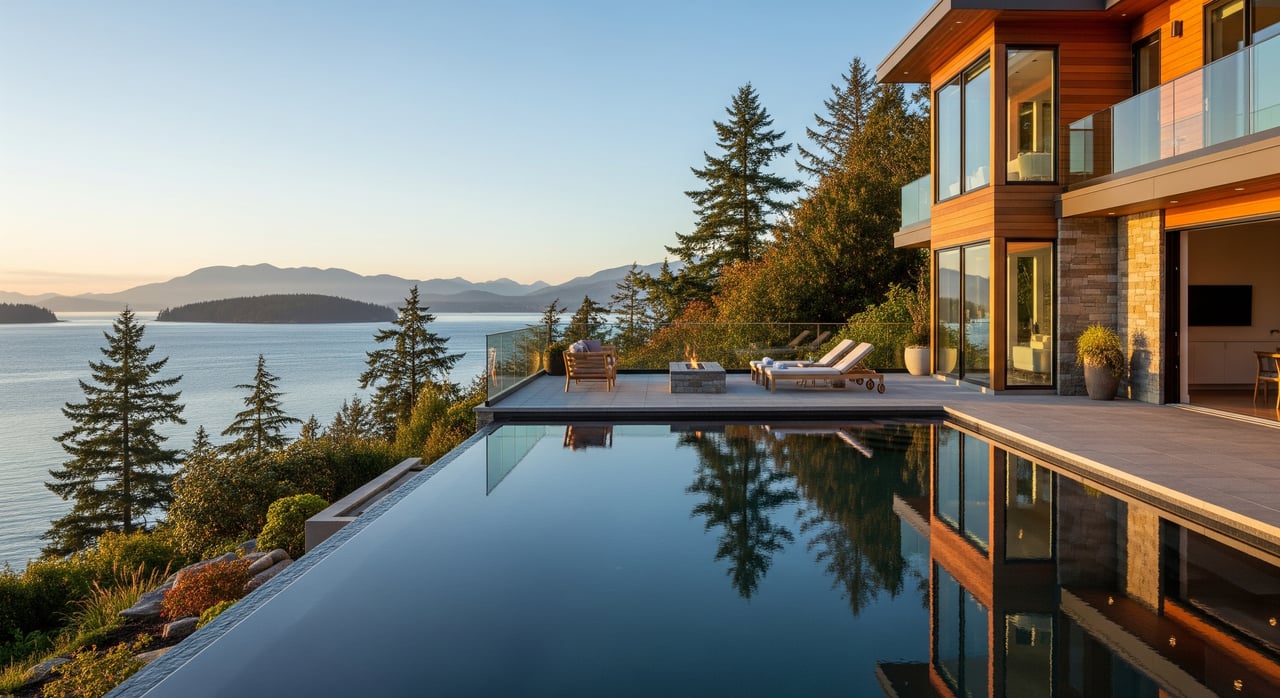
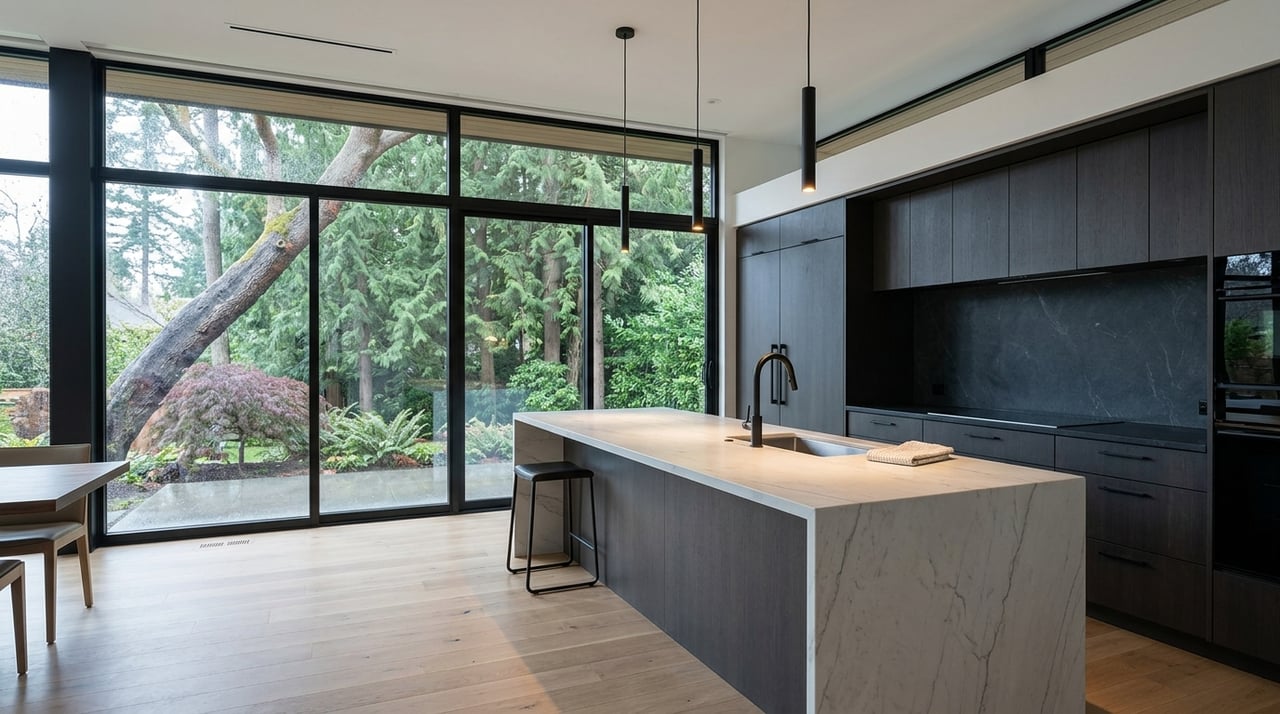
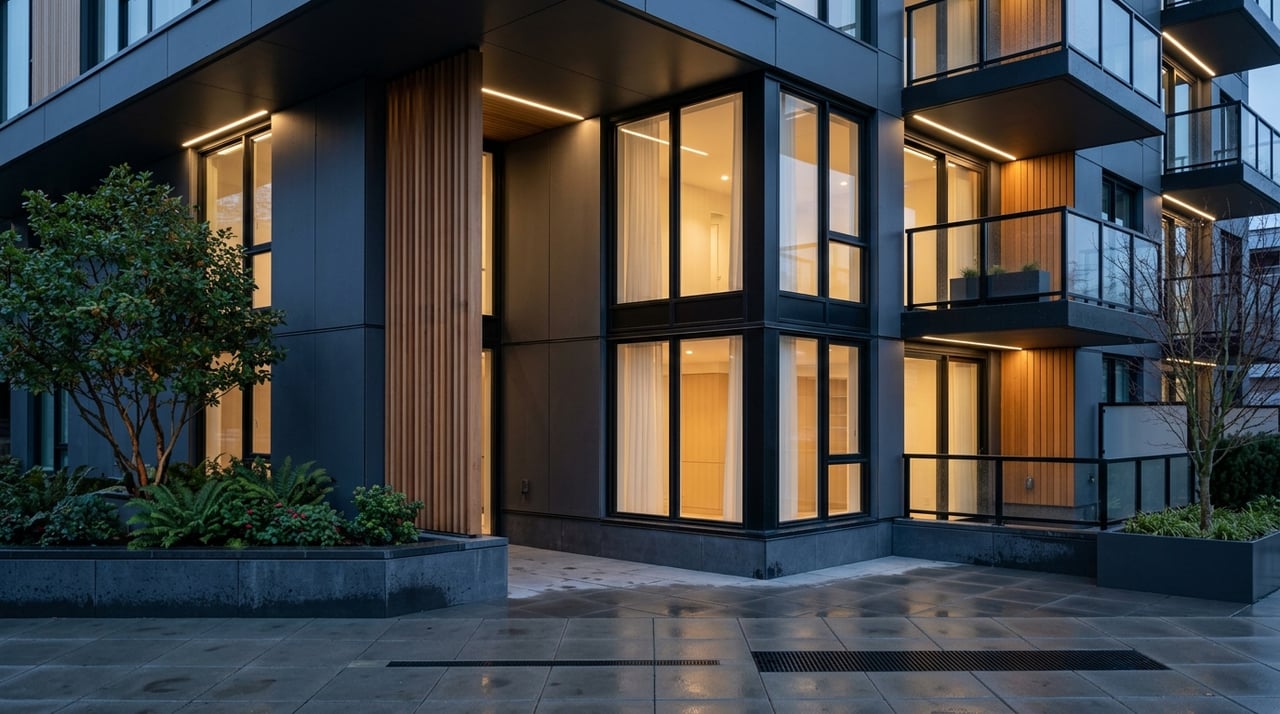
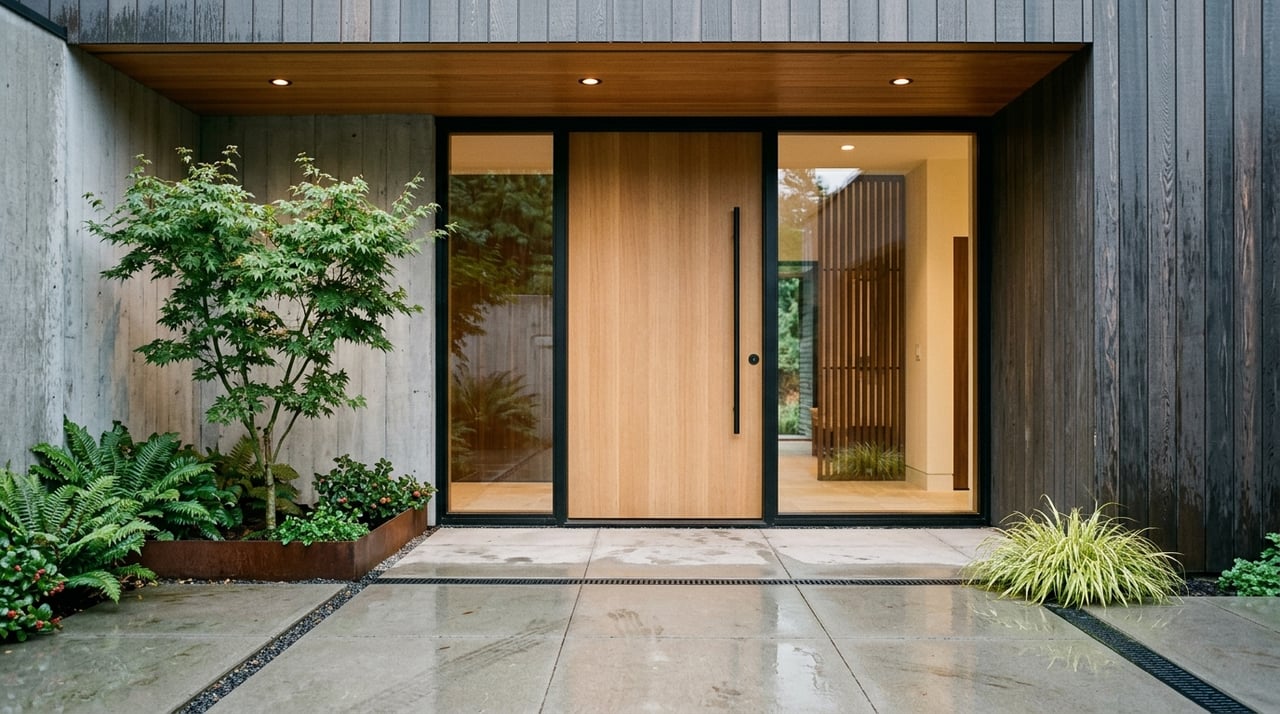
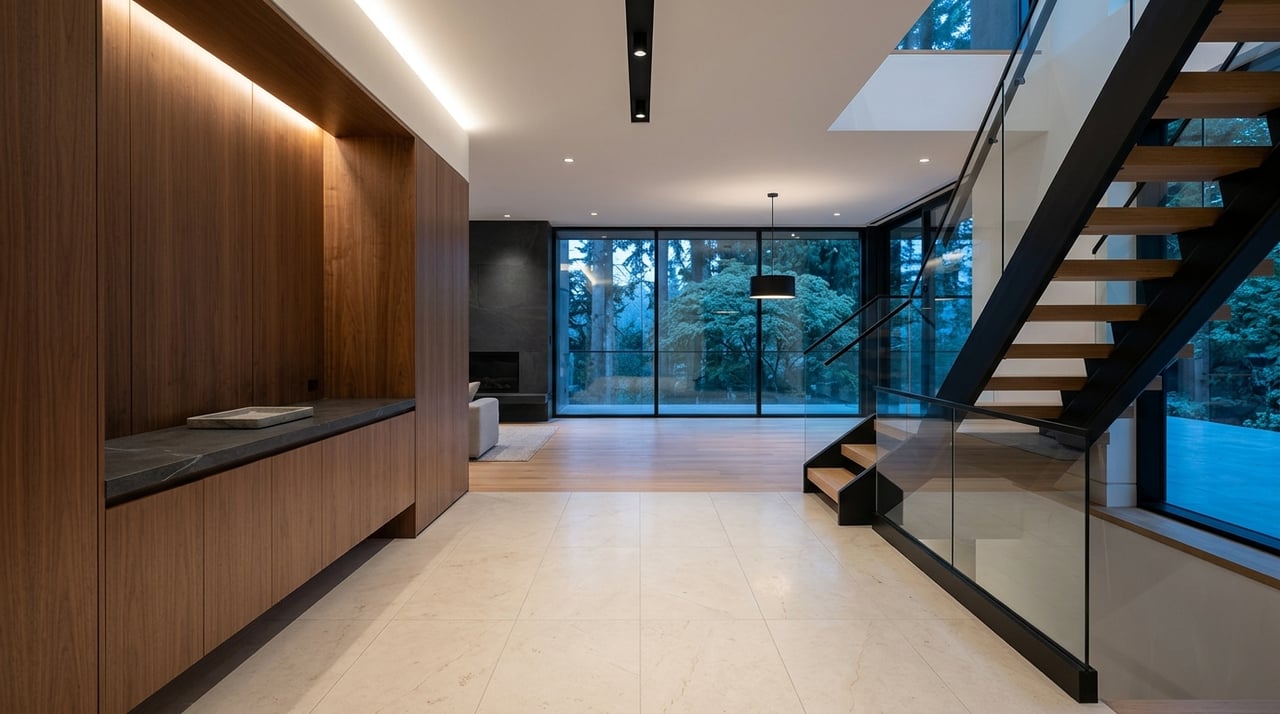
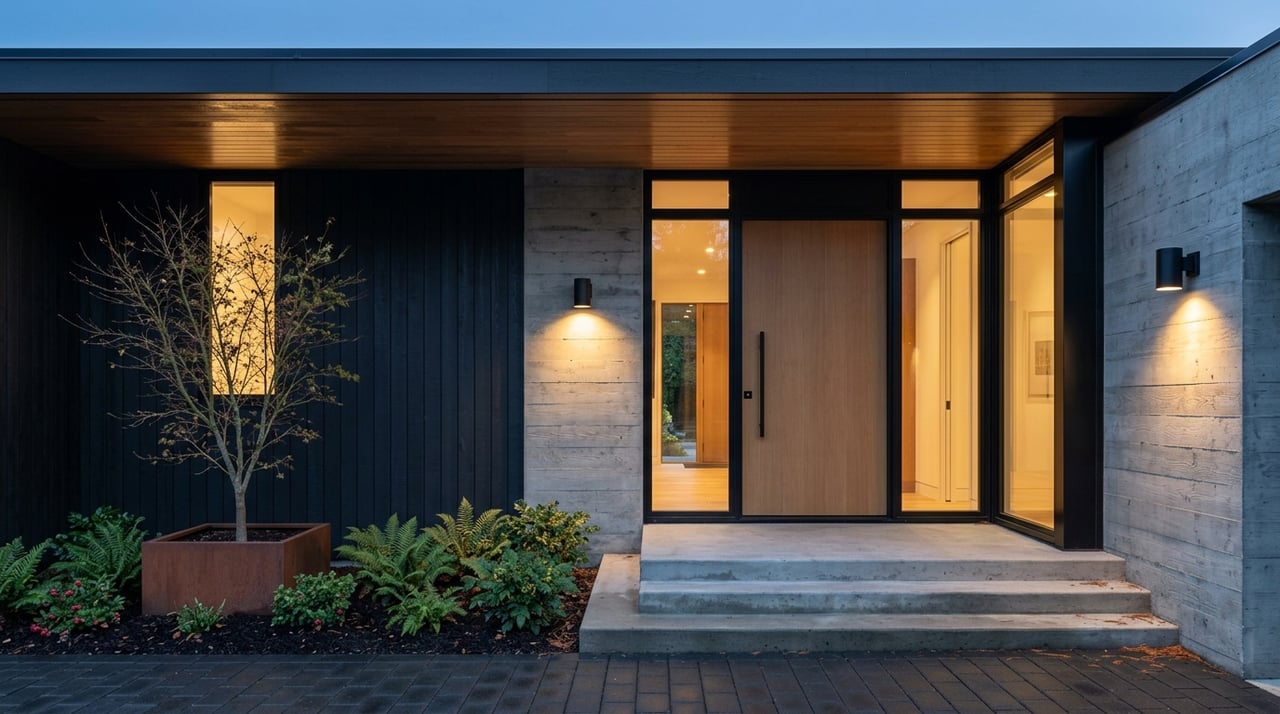
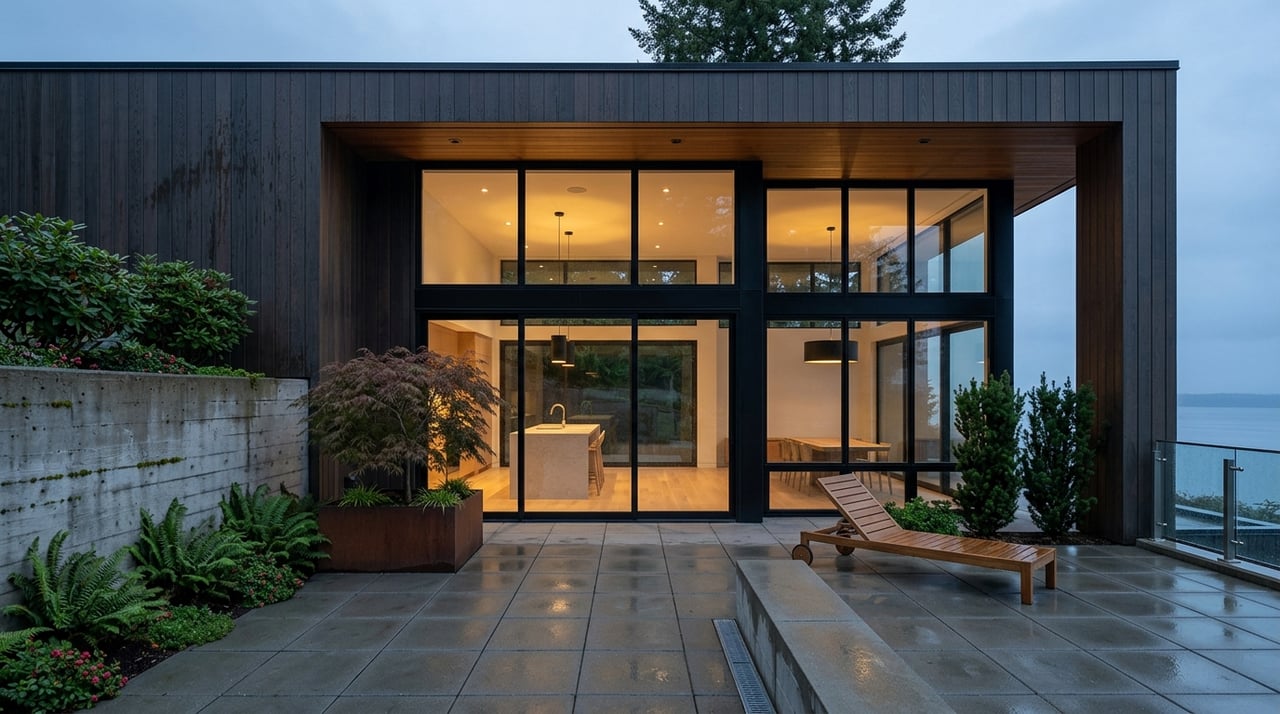
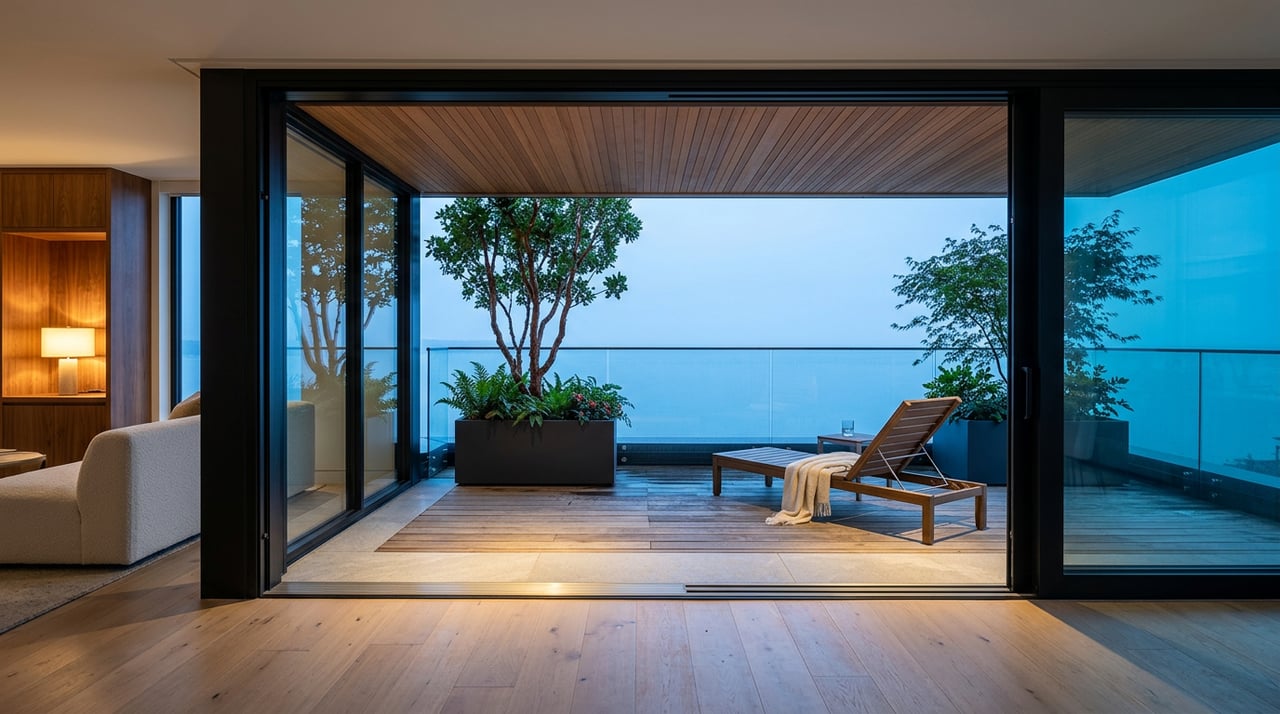
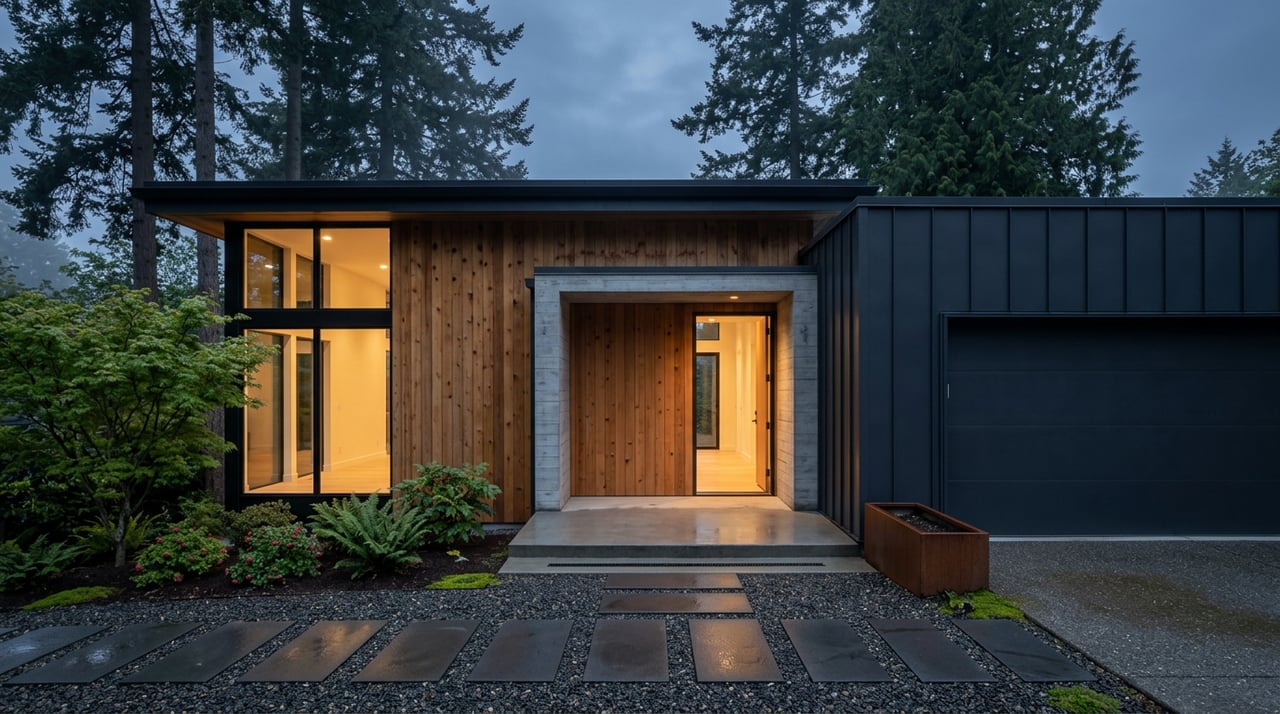
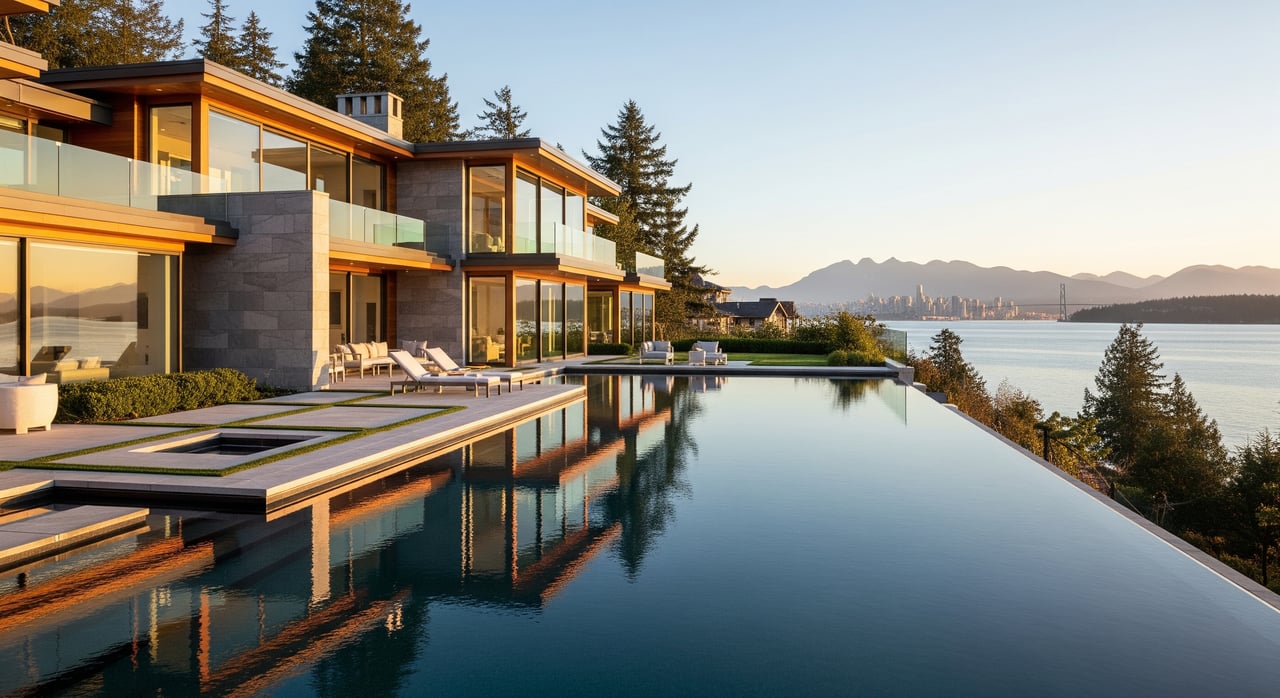
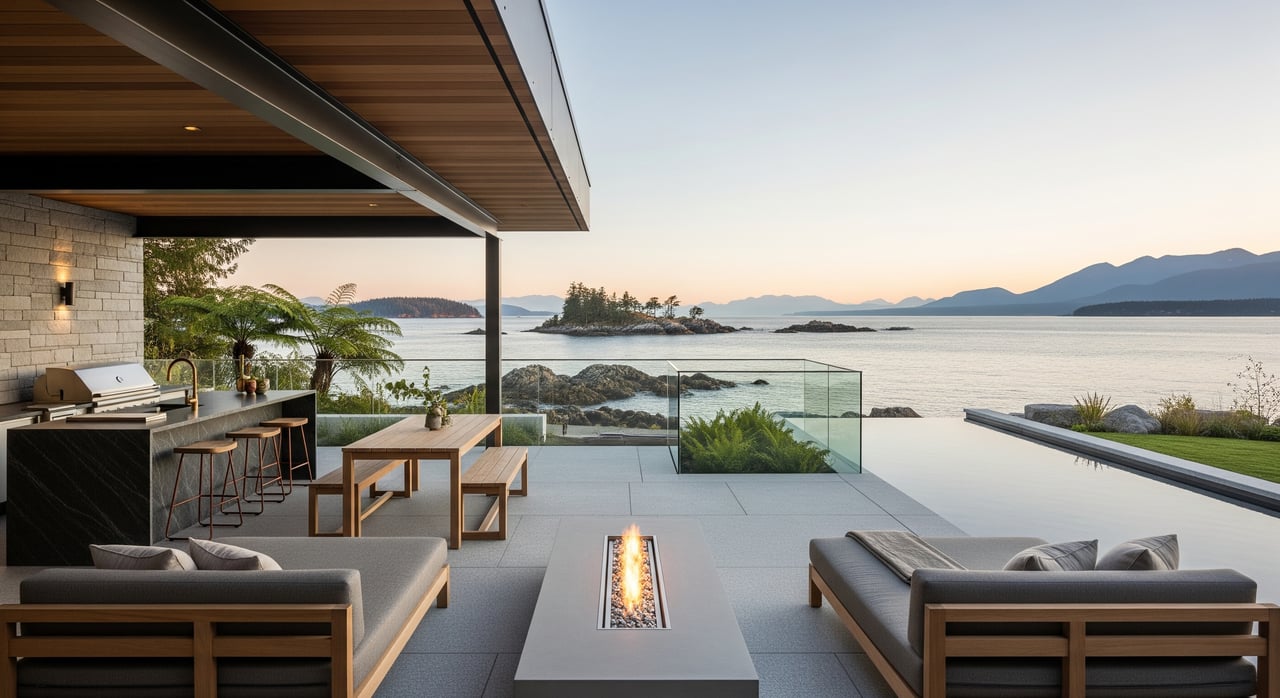
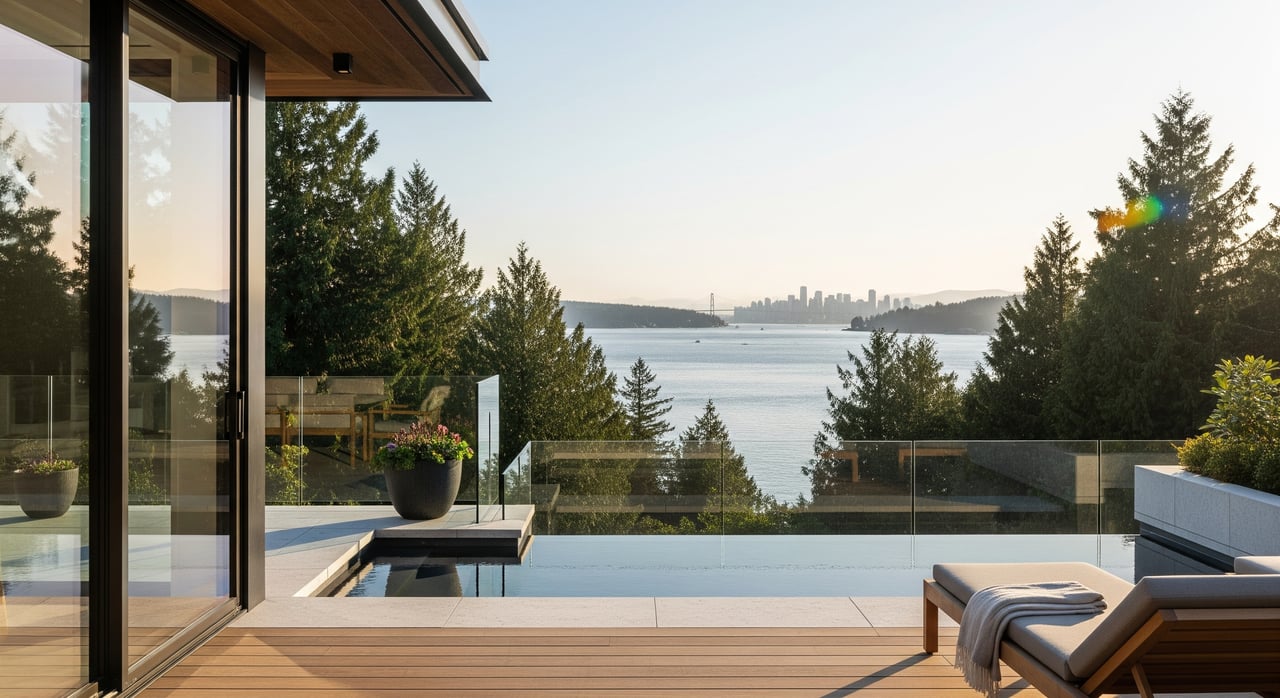
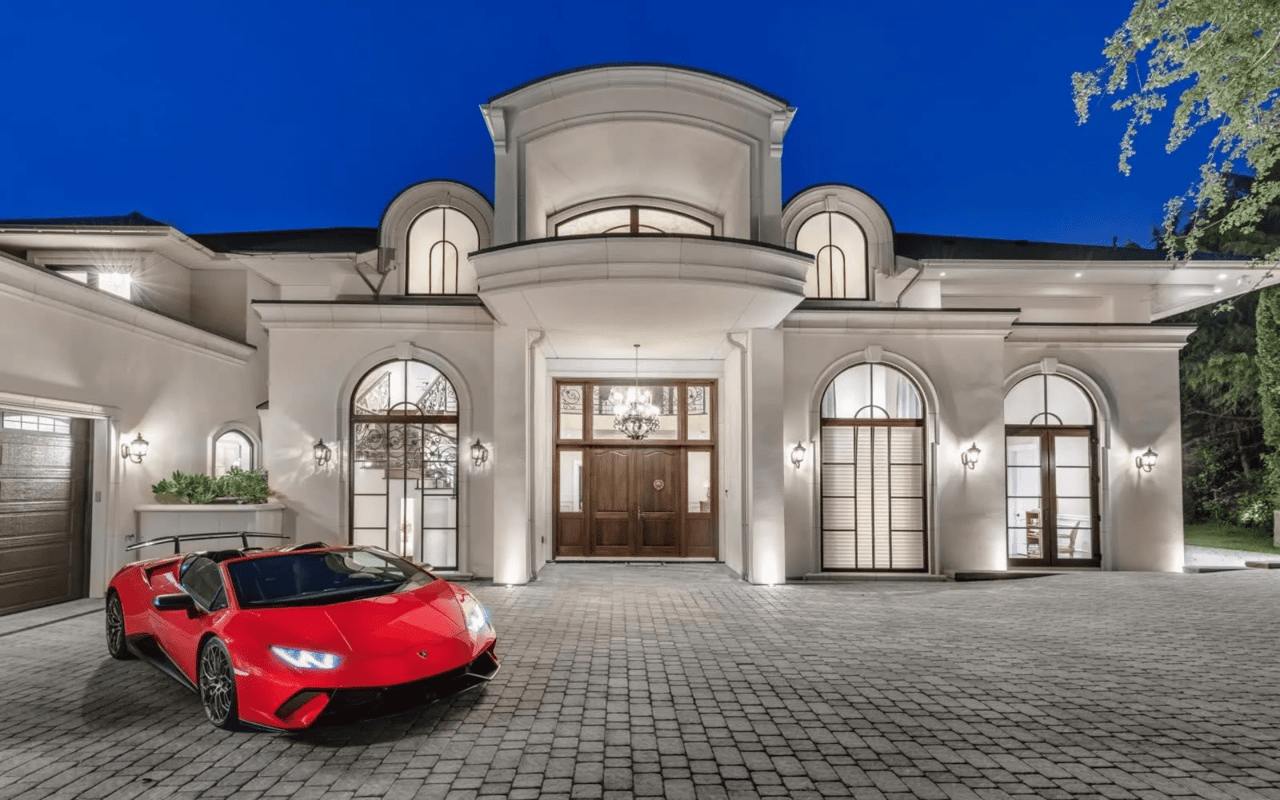
The modern era, from the 1990s to today, is defined by scale and drama. Contemporary masterpieces in concrete, steel, and glass feature clean geometric lines, infinity-edge pools, and walls of sliding glass that open onto heated patios. Alongside them stand grand Euro-classic estates—French Provincial and Italianate châteaux with stone cladding, wrought-iron gates, double-height marble entries, and resort-style grounds. Across nearly all new construction, features like geothermal radiant heating, smart-home automation, secondary prep kitchens, home theaters, and multi-car viewing garages are less a luxury than an expectation.
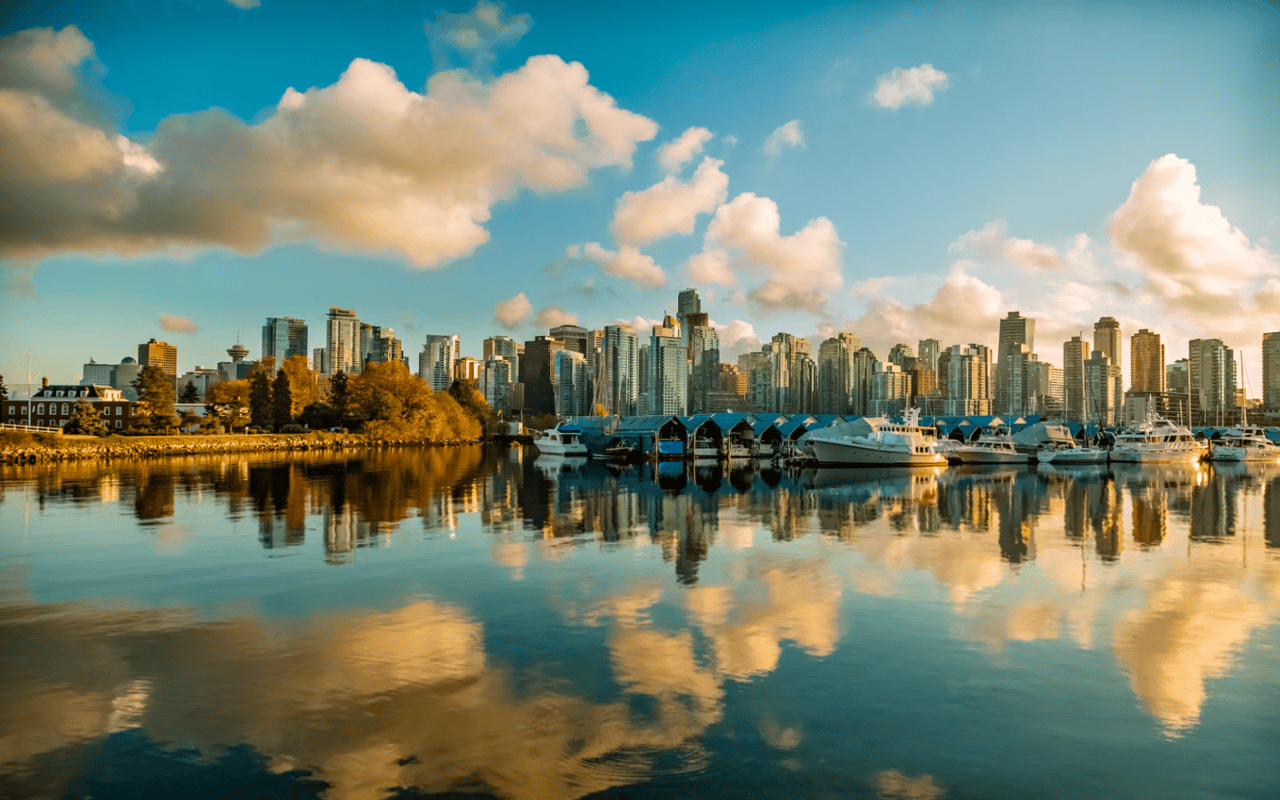
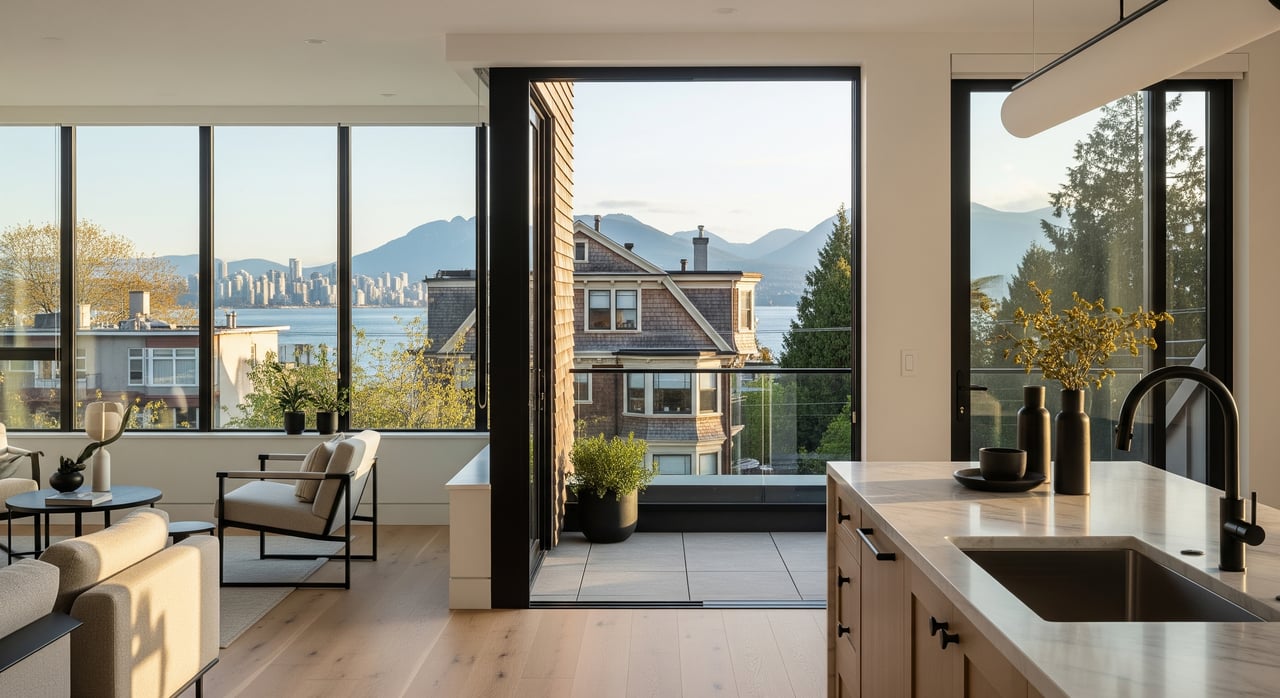
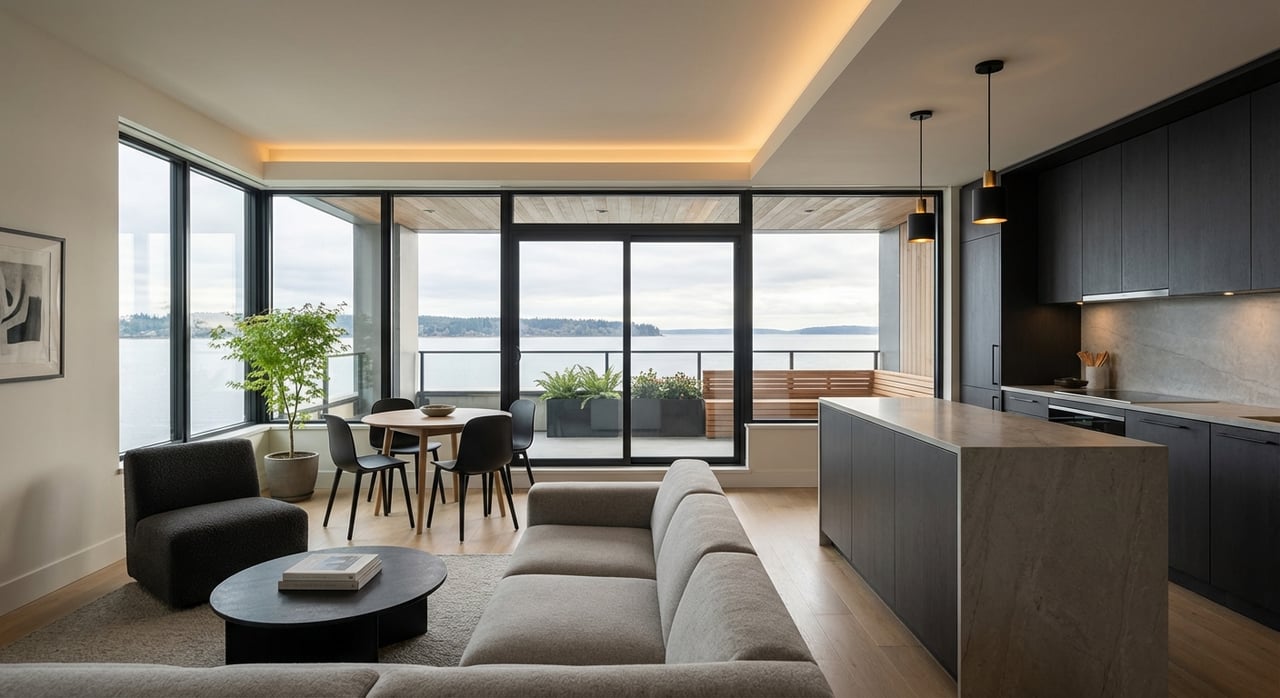
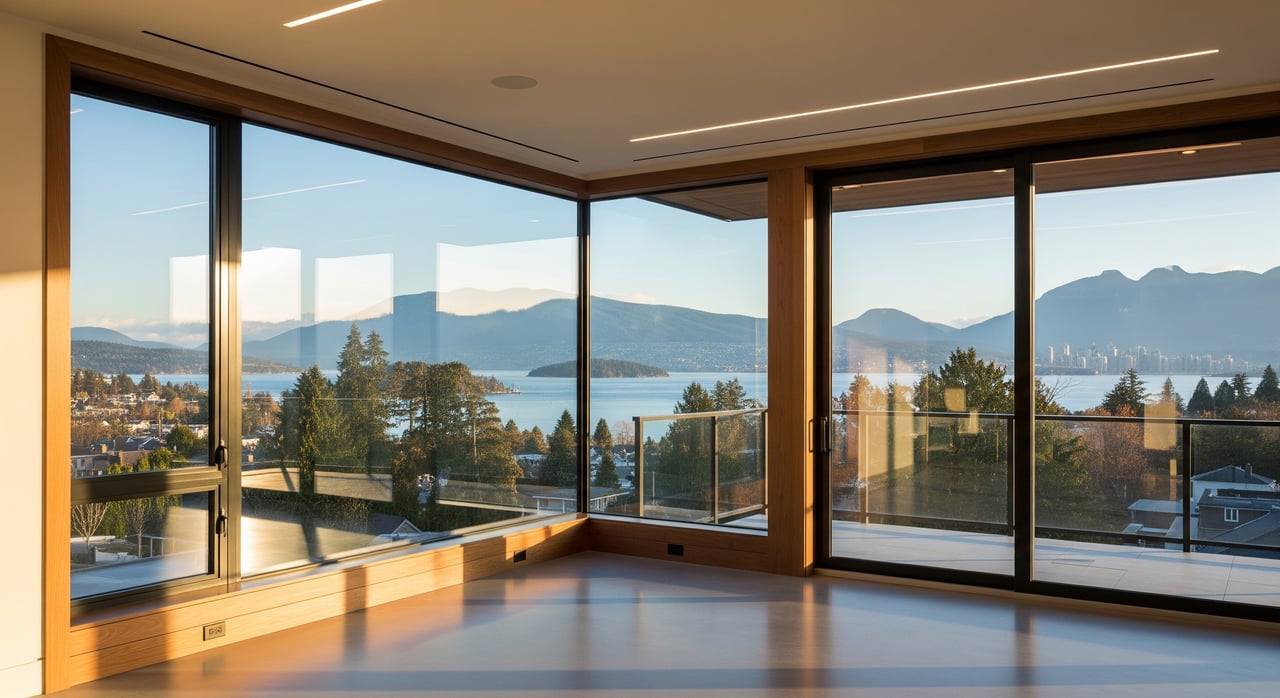
The physical appeal of the British Properties comes down to its topography. Tiered along a south-facing slope, its homes are oriented to capture some of the most celebrated views in North America—the Vancouver skyline, Stanley Park, the Lions Gate Bridge, and Burrard Inlet stretching toward the open Pacific and Vancouver Island.
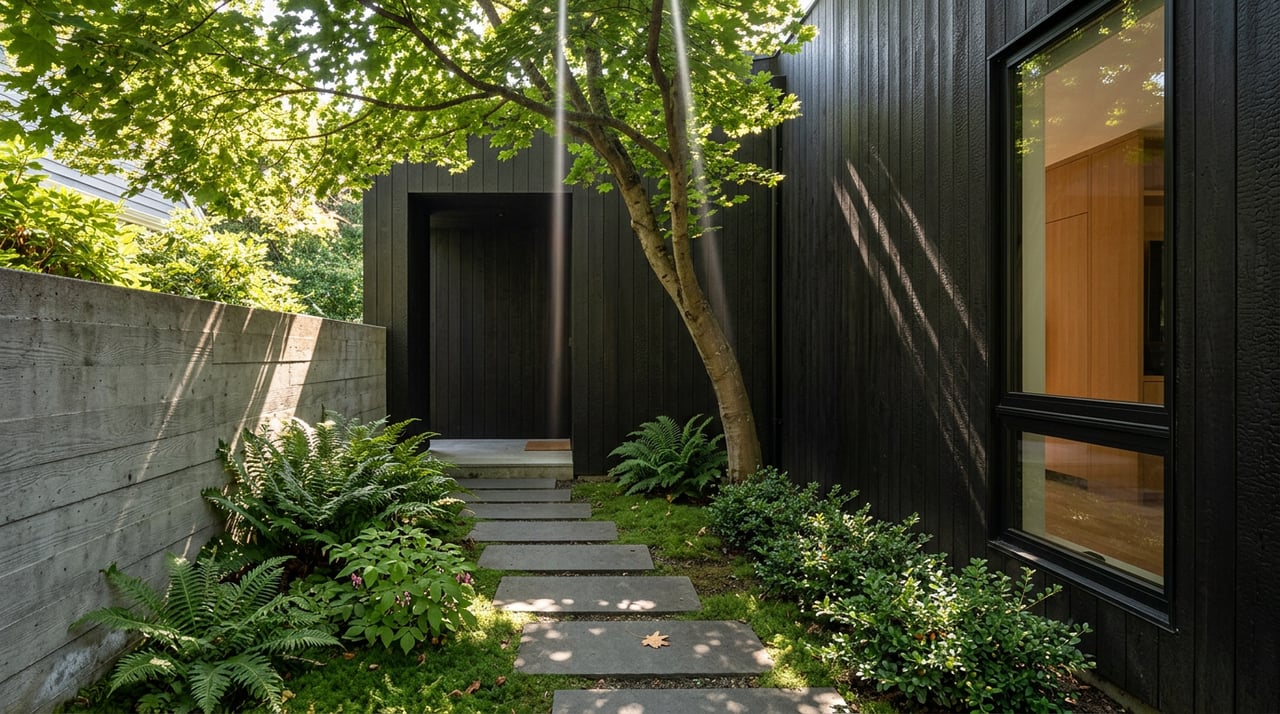
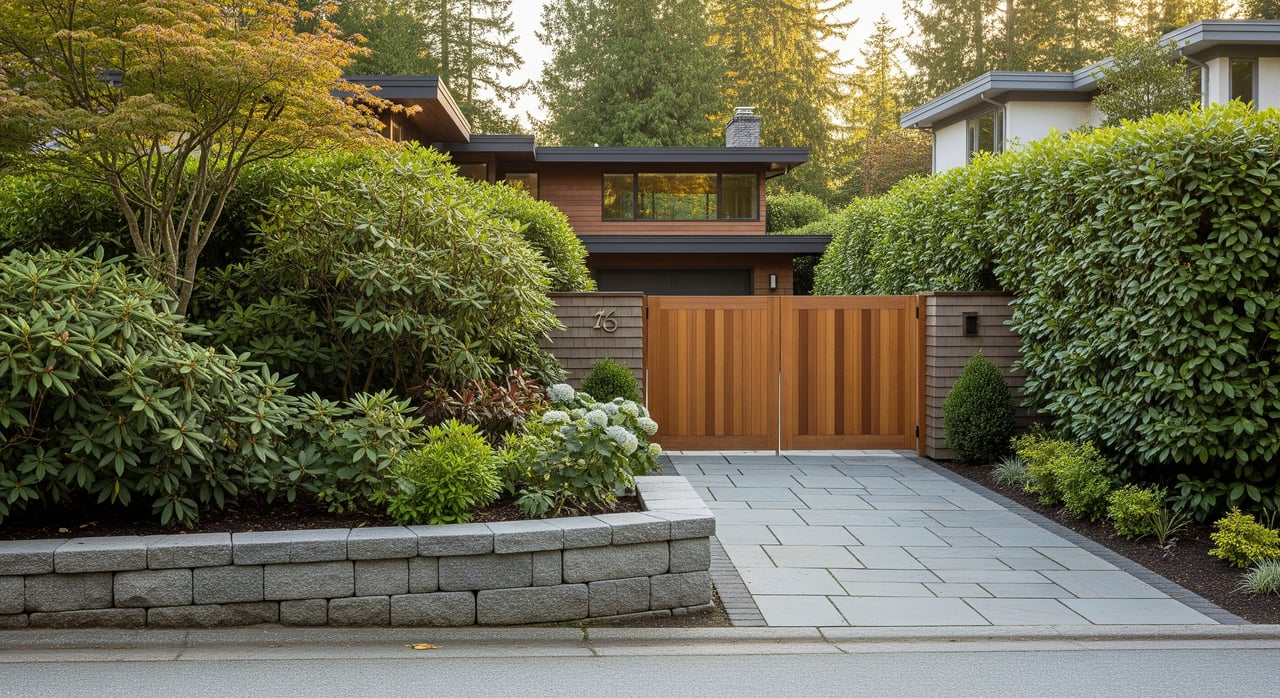
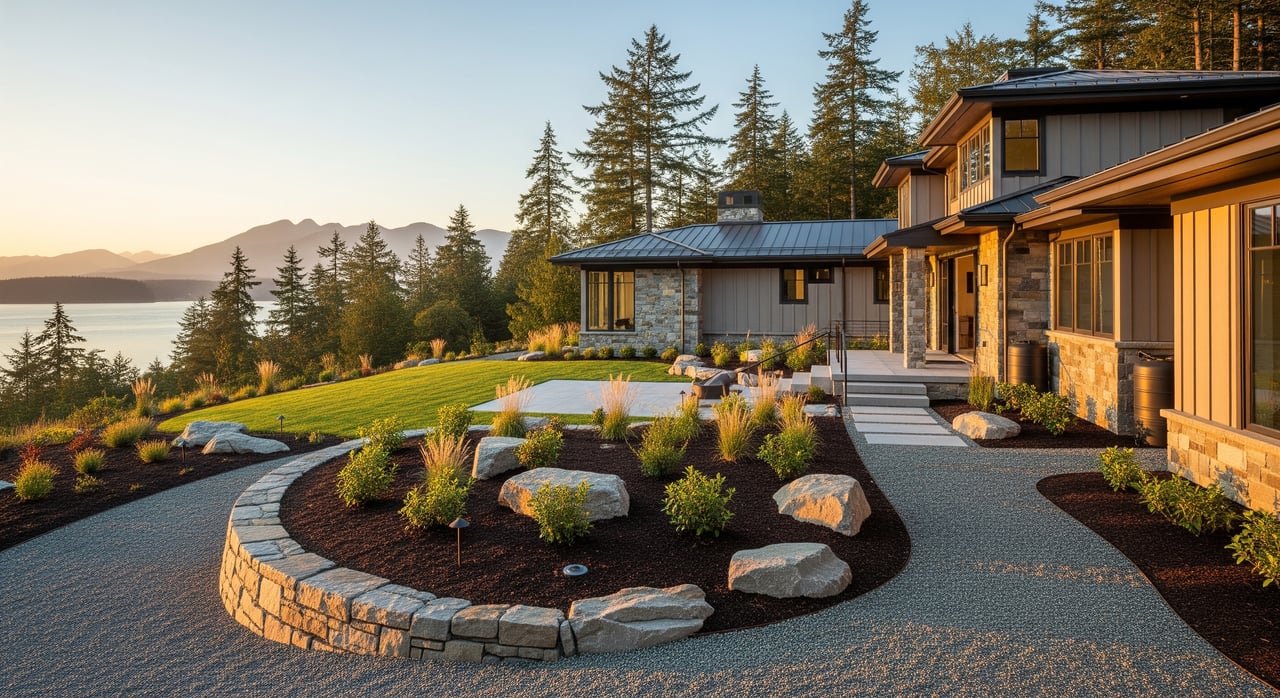
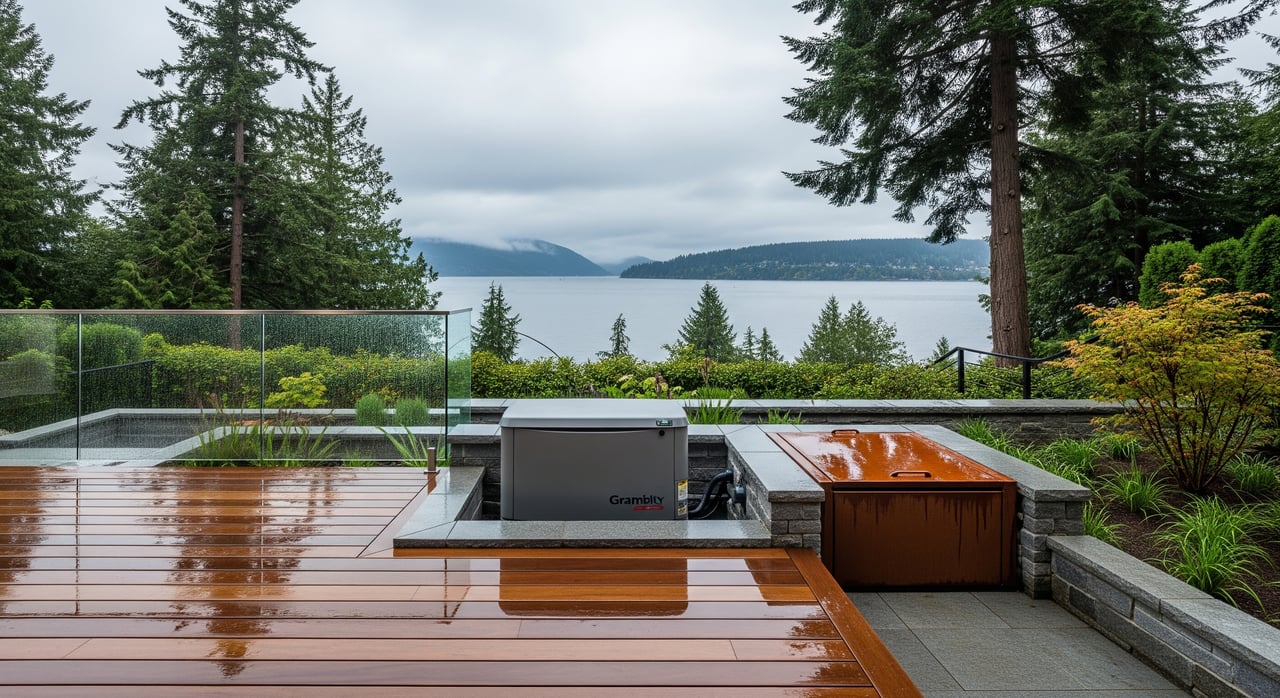
Space is the other defining trait. Estate lots commonly range from half an acre to several acres, and the original master plan preserved the mountain's natural cover, so properties are separated by dense stands of Douglas fir, cedar, and exposed granite. The result is a level of privacy that simply doesn't exist closer to the city.
Nature isn't a backdrop here so much as a neighbor. The community backs onto the wilderness of Cypress Provincial Park, residents genuinely share the environment with deer and black bears, and world-class hiking, mountain biking, and skiing begin just minutes uphill.
For many families, schooling is the single biggest reason they buy here. The neighborhood sits within the West Vancouver School District (District 45), consistently among the top-performing public districts in British Columbia, and it's ringed by elite private schools.
On the public side, Chartwell Elementary sits in the heart of the Properties and is well regarded for its strong academics and multicultural community, while Westcot Elementary, at the base of the neighborhood, routinely ranks among the province's best. For older students, Sentinel Secondary—adjacent to Chartwell—serves as the area's public high school and is known for its Advanced Placement program, French Immersion, and strong athletics.
The private options are what set the area apart nationally. Collingwood School, in the Glenmore area, is a co-educational independent day school built around its "Four Strands" philosophy of academics, arts, athletics, and service, with an extensive slate of AP courses. Nearby Mulgrave School is an International Baccalaureate World School offering the full IB curriculum from preschool through Grade 12 on a striking mountainside campus. Between them, they draw families from across the region and around the world.
Because the community was built directly into the mountain, outdoor recreation isn't a weekend destination—it starts at the front door.
At the neighborhood's core is the Capilano Golf & Country Club, carved from the rainforest in 1937 by architect Stanley Thompson and still ranked among Canada's finest courses. Nearby, the Hollyburn Country Club spreads across 42 acres and functions as an athletic and social hub, with tennis and squash courts, ice rinks, pools, and fitness facilities.
For those who prefer the wild version, trails thread right through the neighborhood. The Brothers Creek Loop and Millstream Trail lead past waterfalls, ancient Western Red Cedars, and the remnants of 1920s logging flumes, connecting to the historic Baden-Powell Trail that spans the entire North Shore. Along the upper slopes, British Pacific Properties built a network of more than five kilometers of wide, paved, stroller-friendly paths, crowned by a 200-meter timber trestle bridge that carries walkers over a sensitive stretch of forest with inlet views.
Above it all sits Cypress Provincial Park, a 2010 Winter Olympics venue offering downhill and cross-country skiing and snowshoeing in winter, and mountain biking and demanding hikes—like the trek to Eagle Bluffs—in summer.
This is where the neighborhood's original design shows its trade-offs. By intention, the British Properties is a purely residential sanctuary with no commercial zoning inside its boundaries—no corner store, no café to walk to. Everything is a short drive down the mountain.
That said, the amenities at the base are excellent. Park Royal Shopping Centre, at the foot of Taylor Way, has evolved from Canada's oldest mall into a sprawling upscale lifestyle district with retailers like Simons and Nordstrom Rack, a Whole Foods, and a VIP cinema. A little farther down, the walkable beachside villages of Ambleside and Dundarave offer independent boutiques, cafés, galleries, and grocers.
Dining nearby leans into the setting. The Salmon House on the Hill, perched on the edge of the Properties, is a West Vancouver institution known for alderwood-grilled seafood and panoramic views, while The Beach House at Dundarave Pier serves upscale coastal fare in a restored heritage building on the water. For upper-mountain residents, developers are gradually building Cypress Village, which today centers on a popular seasonal pop-up gathering space and is planned to grow into a full high-elevation village hub with retail and transit.
The British Properties feels remote, but it's genuinely close to the city—provided you respect the bridge.
In light traffic, the drive from the lower Properties to downtown Vancouver runs about 15 to 20 minutes: down the mountain via Taylor Way or Capilano Road, onto Marine Drive, and across the Lions Gate Bridge into Stanley Park. The catch is that nearly every downtown trip depends on that single crossing. At rush hour, or after an accident, the same drive can stretch to 35 to 50 minutes as traffic bottlenecks at the bridge approach.
Transit exists but is scaled to the low-density layout. TransLink community shuttles, like the #254, wind through the neighborhood's curving streets to the Park Royal Transit Exchange, where frequent express buses cross into downtown. And the neighborhood's position just above Highway 1 makes east-west travel fast—easy runs toward North Vancouver and Burnaby, or west to the Horseshoe Bay ferry terminal (about ten minutes) and the Sea-to-Sky Highway to Whistler (roughly 85 minutes).
Life here is defined by quiet affluence, deep privacy, and a strong orientation toward family and health. This is not a neighborhood for nightlife or spontaneous urban energy; it's a structured, peaceful retreat.
Once a stronghold of wealthy Anglo-Canadian families, the community has become a genuinely international enclave, with substantial East Asian—primarily Chinese—and Iranian populations. Many residents are entrepreneurs, executives, or international business owners who chose the area for its safety, prestige, and schools.
The neighborhood is also strongly multi-generational. The combination of large lots and top-tier schooling makes it common to find spacious estates housing grandparents, parents, and children under one roof. Social life, meanwhile, tends to revolve around the private clubs rather than any commercial main street—the Capilano and Hollyburn clubs function as the neighborhood's living rooms, where families dine, network, and enroll their kids in swim and tennis. Day to day, the streets are remarkably still: long setbacks, gated drives, and heavy landscaping guard privacy, and the most common street traffic is morning power-walkers and cyclists grinding up the hills.
Choosing this neighborhood comes down to weighing genuinely world-class advantages against the practical realities of mountainside living. Here's an honest accounting.
What makes it exceptional:
What to weigh carefully:
The British Properties is an extraordinary place to live, but it rewards a specific set of priorities.
You'll thrive here if you value privacy, prestige, and natural beauty above all else—if you want a grand, multi-generational estate with a view, place a premium on elite schooling, and would rather spend a weekend on a golf course, a tennis court, or a ski slope than in a downtown cocktail lounge. For that life, few neighborhoods anywhere offer more.
You may want to look elsewhere if you crave walkability, urban energy, and spontaneous social life. If depending on a car frustrates you, if bridge traffic would wear on you, or if you want to step out your door into a lively café district, the seclusion here can feel isolating. In that case, the beachside villages of Ambleside and Dundarave, or Vancouver's West Side, might suit you better.
That decision is rarely simple, and it's exactly the kind of judgment call where local, on-the-ground guidance matters most.
If you're weighing a move to the British Properties—whether you're searching for a legacy estate, a view lot to build on, or simply trying to understand where this market is heading—it helps to work with someone who knows both the neighborhood and its international clientele intimately. Amir Miri, of Amir Miri Personal Real Estate Corporation, is a Top West Vancouver and North Vancouver luxury real estate agent whose background spans the world's most exclusive hospitality brands and whose Persian language skills and global experience make him a natural fit for this community's diverse, high-net-worth buyers and sellers. He treats every deal as if it were his own and every client as family.
To ask questions about the British Properties, tour available homes, or get a candid read on your options, reach Amir directly at 604.657.5030 or [email protected], or visit him at 1730 Marine Dr, West Vancouver, BC. Consider this an open invitation to a conversation—no pressure, just a knowledgeable local resource ready when you are.
There's plenty to do around British Properties, including shopping, dining, nightlife, parks, and more. Data provided by Walk Score and Yelp.
Explore popular things to do in the area, including Causual Chen style Taichi.
British Properties has 1,662 households, with an average household size of 3. Data provided by Statistics Canada. Here’s what the people living in British Properties do for work — and how long it takes them to get there. Data provided by Statistics Canada.
Total Population
Population Density Population Density This is the number of people per square mile in a neighborhood.
Median Age
Men vs Women
Population by Age Group
0-9 Years
10-17 Years
18-24 Years
25-64 Years
65-74 Years
75+ Years
Education Level
Total Households
Average Household Size
Average individual Income
Households with Children
With Children:
Without Children:
Marital Status
Blue vs White Collar Workers
Blue Collar:
White Collar:
Effective strategies for attracting high-end buyers to your luxury home.
Read More
West Vancouver offers the best in elegant dining, from charming cafes to upscale e...
Read More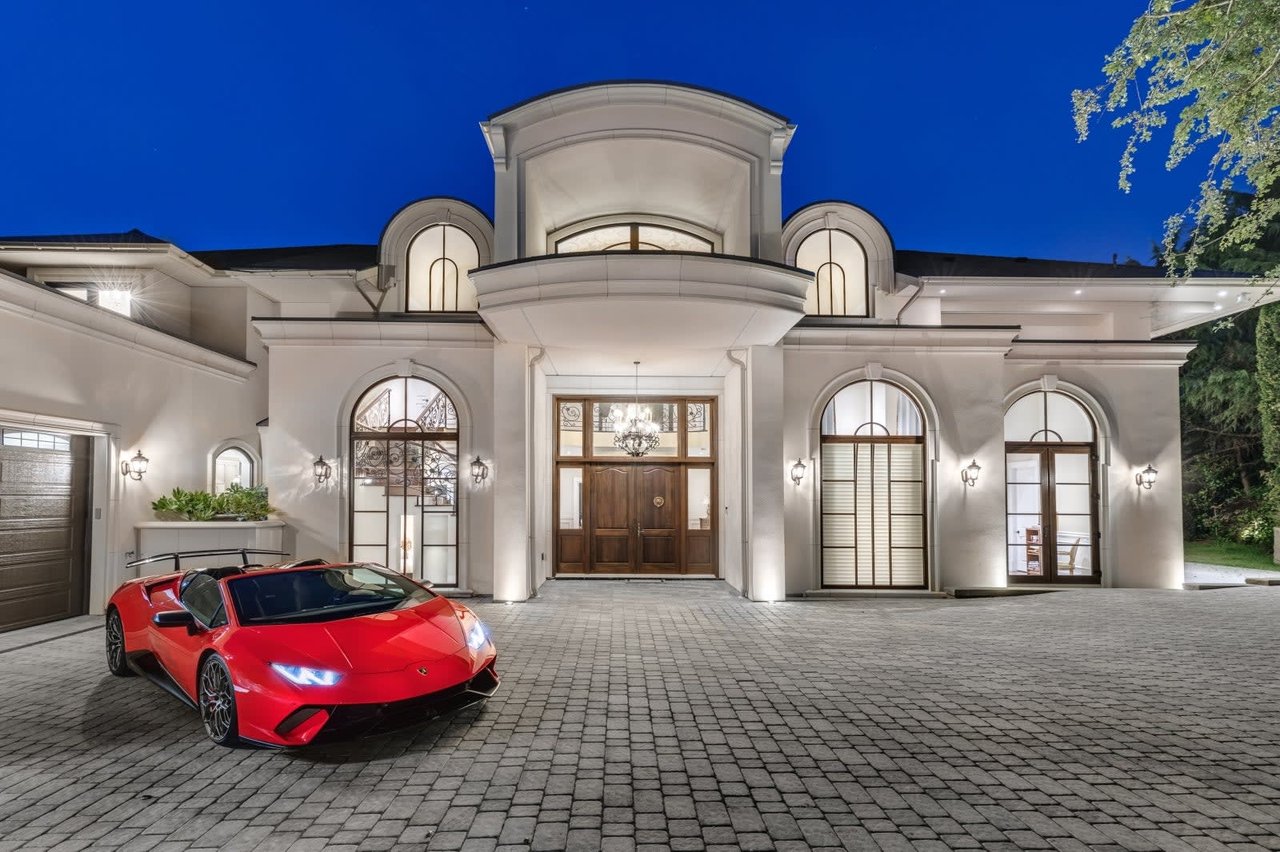
An insider breakdown of buyer profiles, architecture, pricing psychology and view ...
Read More
Discover dining spots that welcome you and your furry friends.
Read More
Find delicious coffee and fresh pastries throughout West Vancouver.
Read More
Hit the gym and train in several disciplines in West Vancouver.
Read More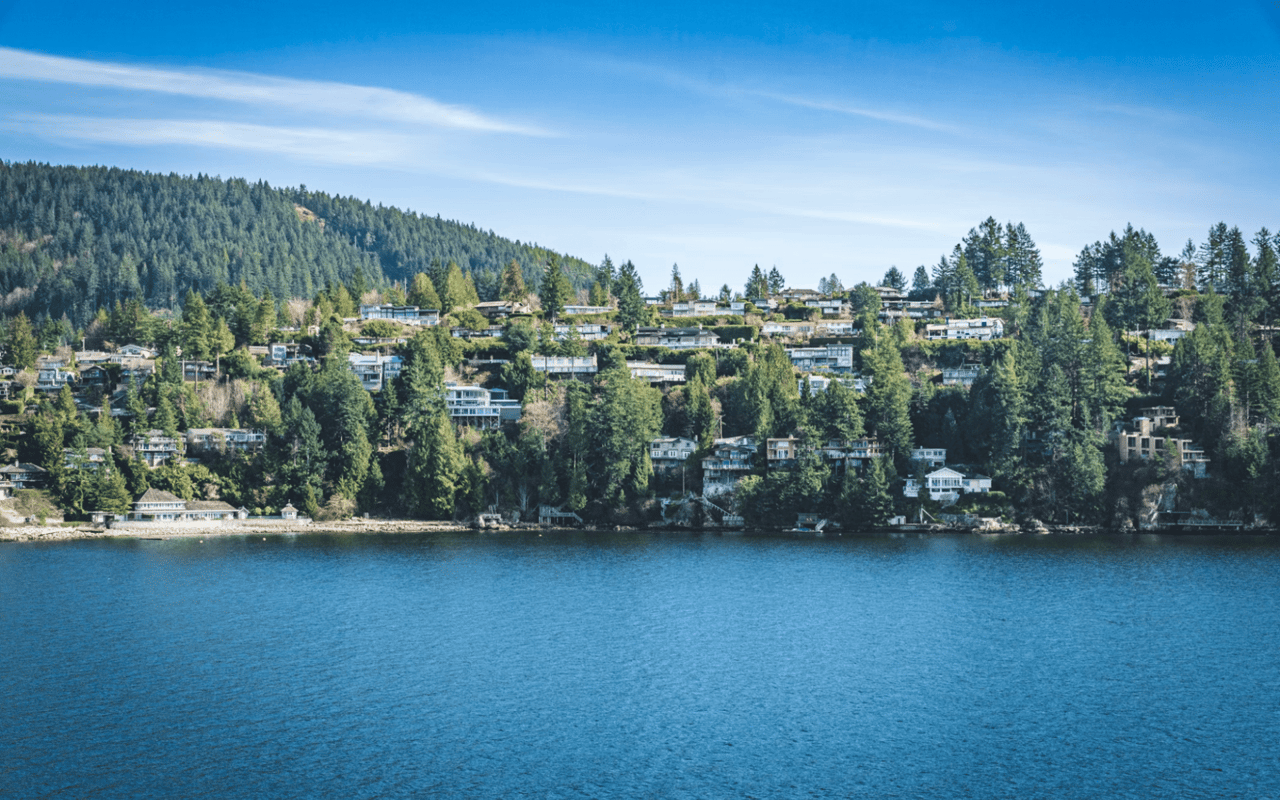
Explore these areas to determine which one is the perfect fit.
Read More
Elevate your living space with exceptional furniture and decor.
Read More
The charm and affluence of West Vancouver await discerning and adventurous homebuy...
Read More
Transform Your Home's First Impression with These Expert Landscaping Ideas.
Read More
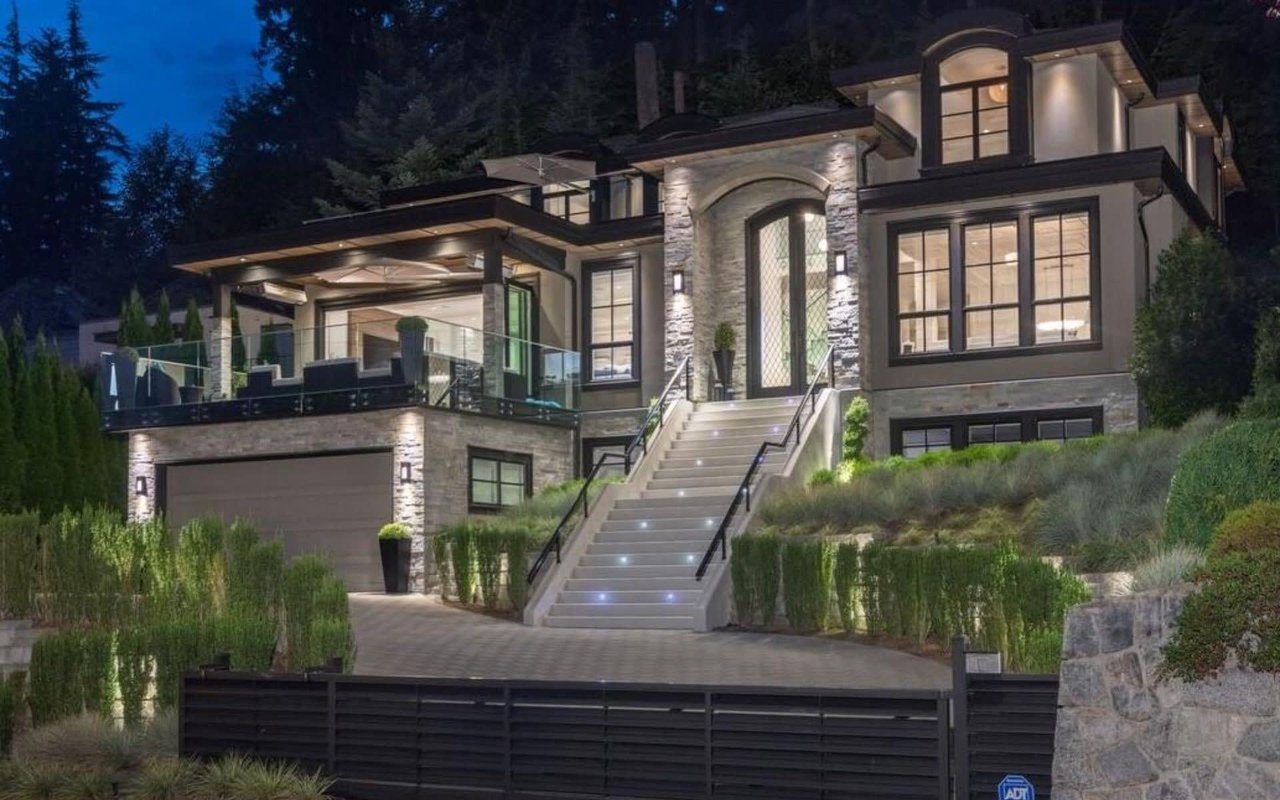
Avoid setbacks and start fresh with a renowned realtor providing step-by-step info...
Read More
West Vancouver’s best primary, elementary, and secondary schools.
Read More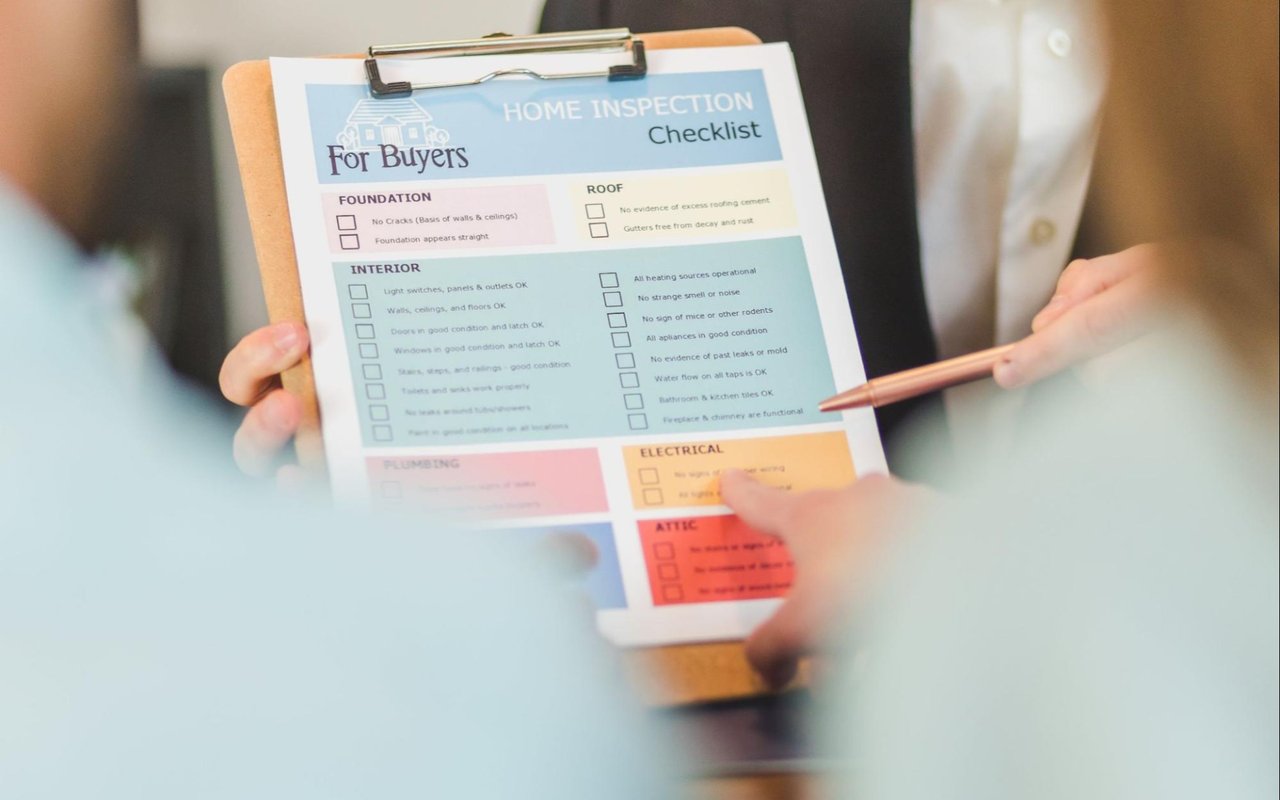
Your roadmap to smarter offers, clearer negotiations, and more confident ownership.
Read More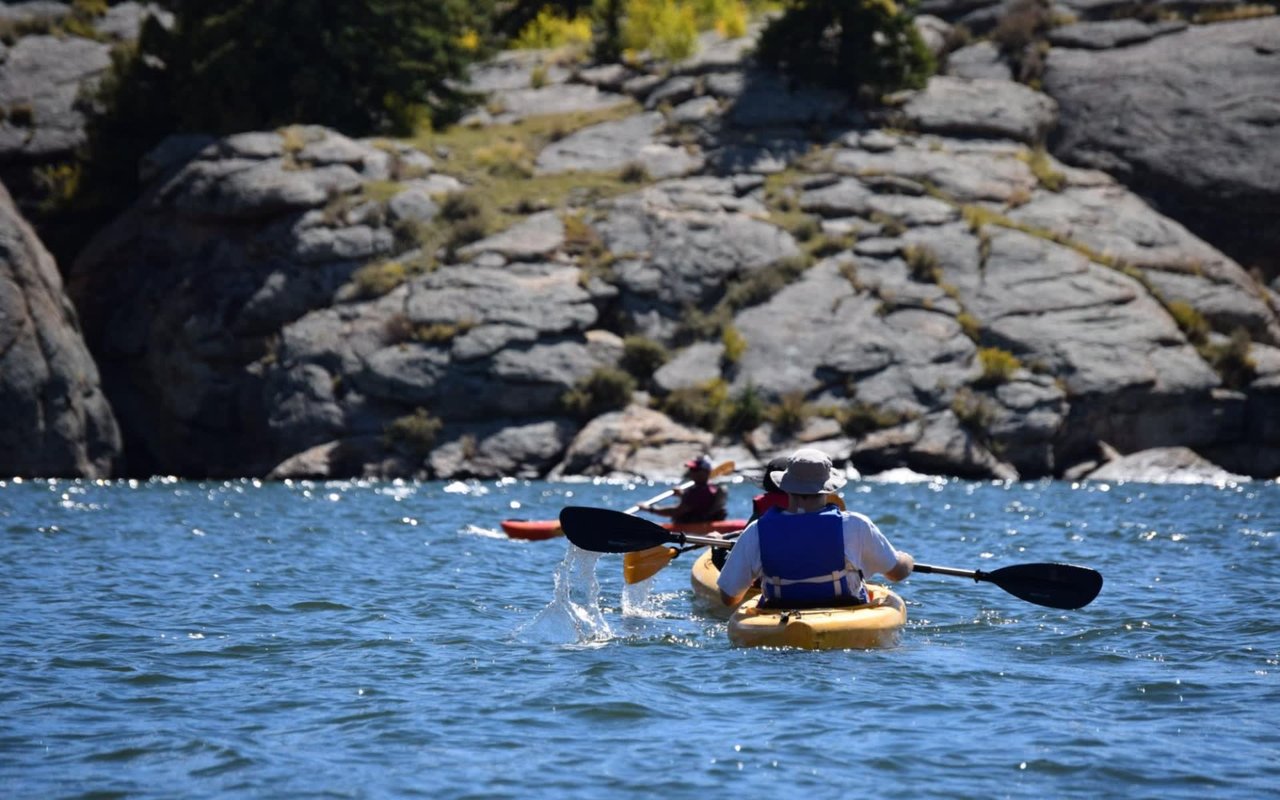
Find ways to make your life in North Vancouver more active, more adventurous, and ...
Read More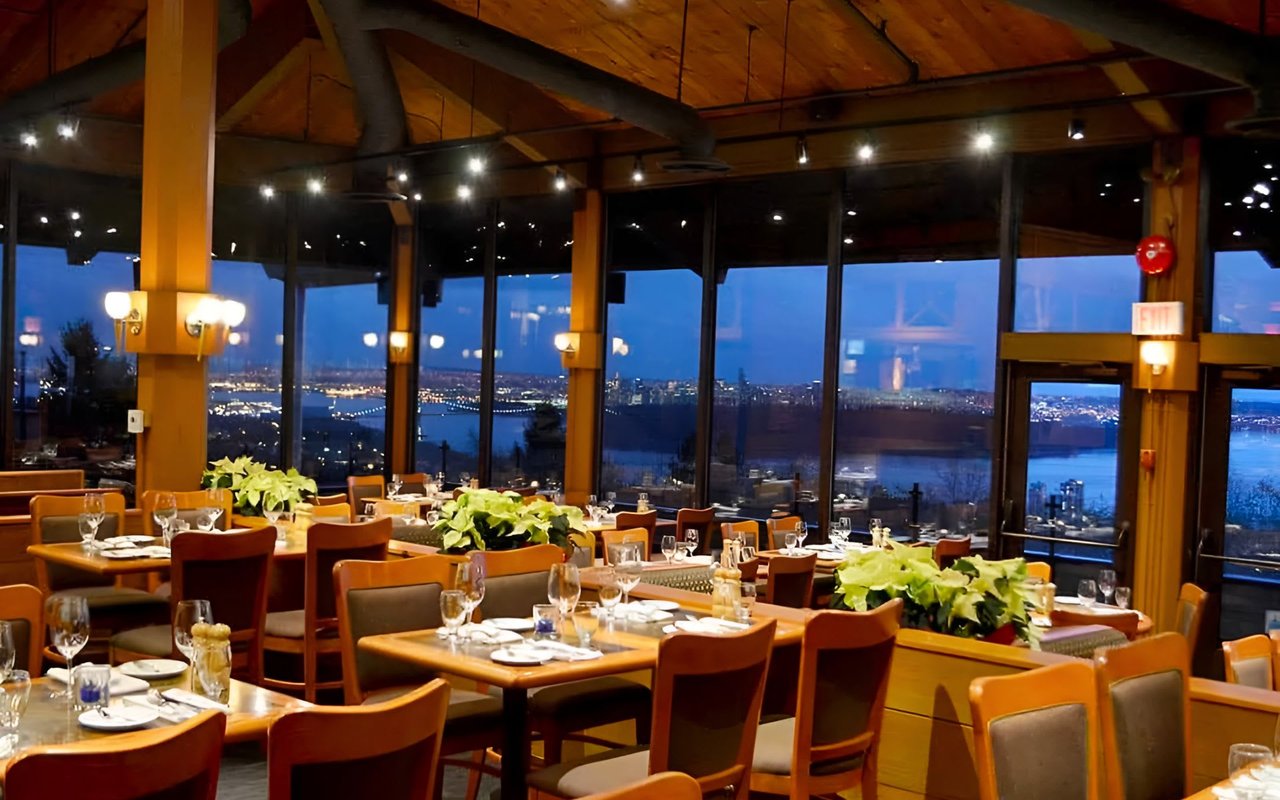
Your guide to some of the top eateries in beautiful West Vancouver.
Read More
Your roadmap to a higher sale price, a faster timeline, and a more confident negot...
Read More
Uncover the lesser-known secrets of West Vancouver, from its rich history to breat...
Read More
Discover the Best Option Before Embarking On Your Real Estate Venture.
Read More
Whether seeking an urban, waterfront lifestyle or something more rustic and rural,...
Read More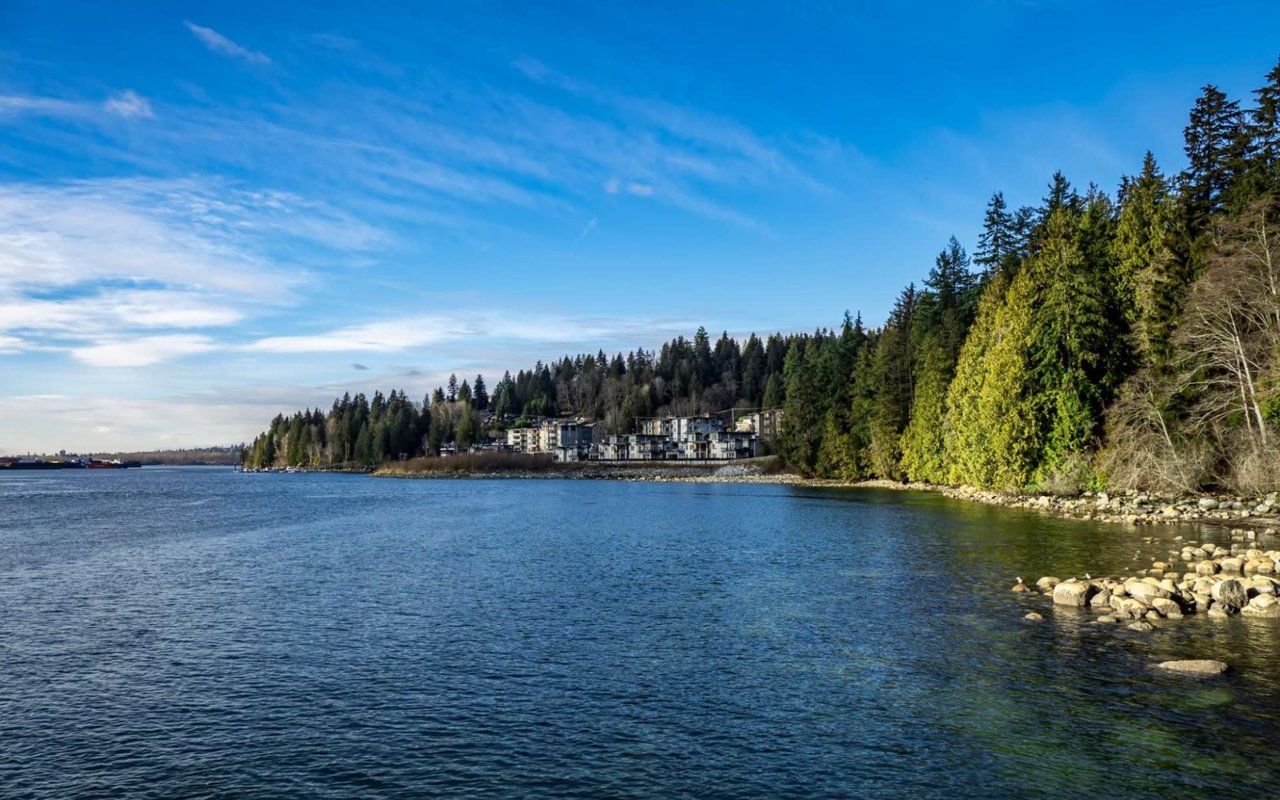
Known for stunning natural beauty and a magnificent blend of urban and outdoor lif...
Read More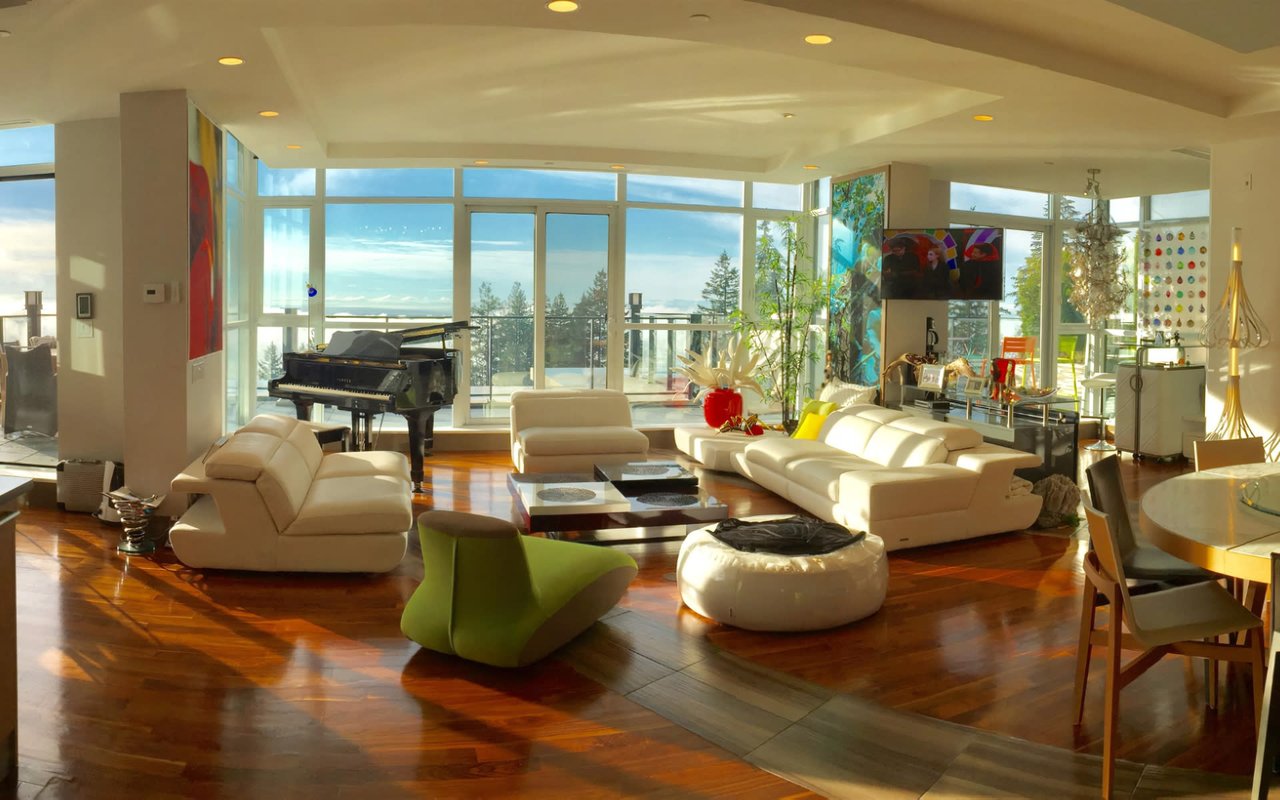
Discovering the Pinnacle of Sophistication and Service in High-End Condo Living.
Read More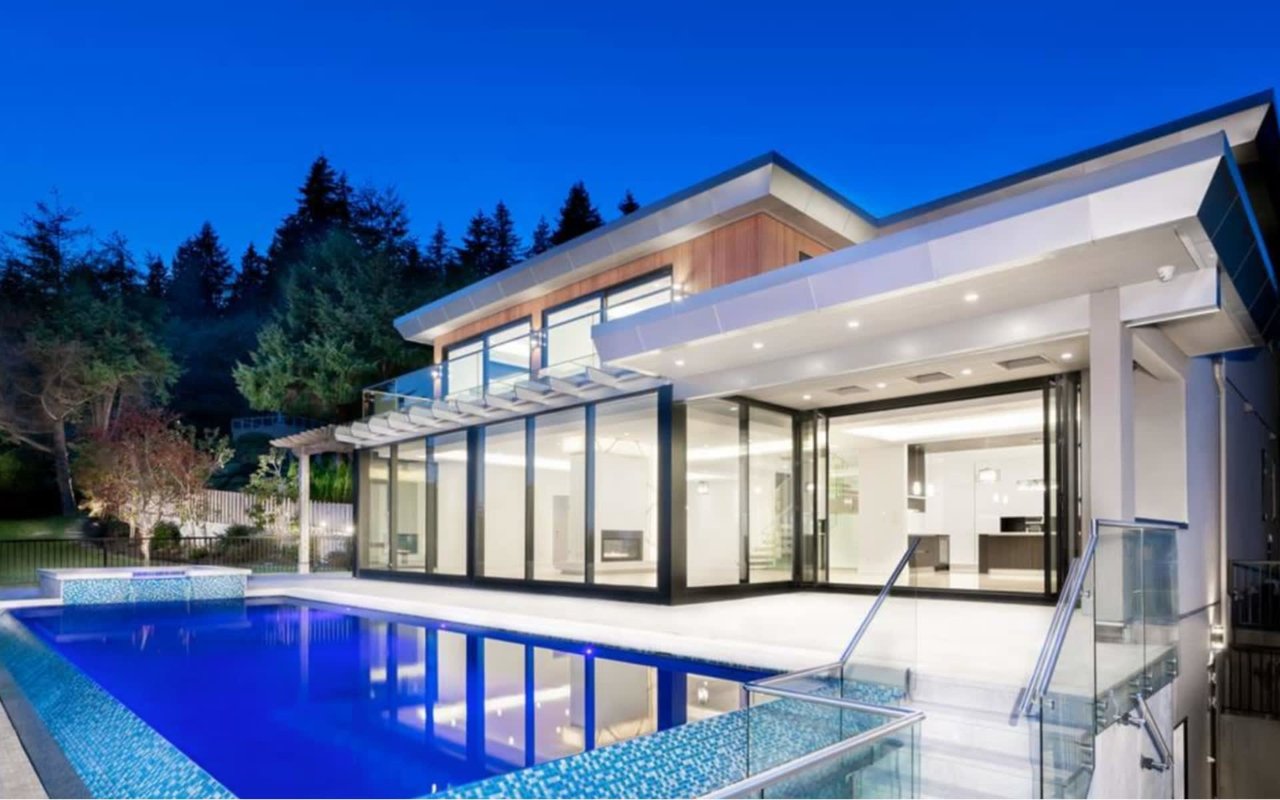
Navigating the real estate landscape with expert answers.
Read More
Your comprehensive guide to exploring the beauty and charm of North Vancouver.
Read More
Simple Steps to Keep Your Home Warm and Efficient in the Colder Months.
Read More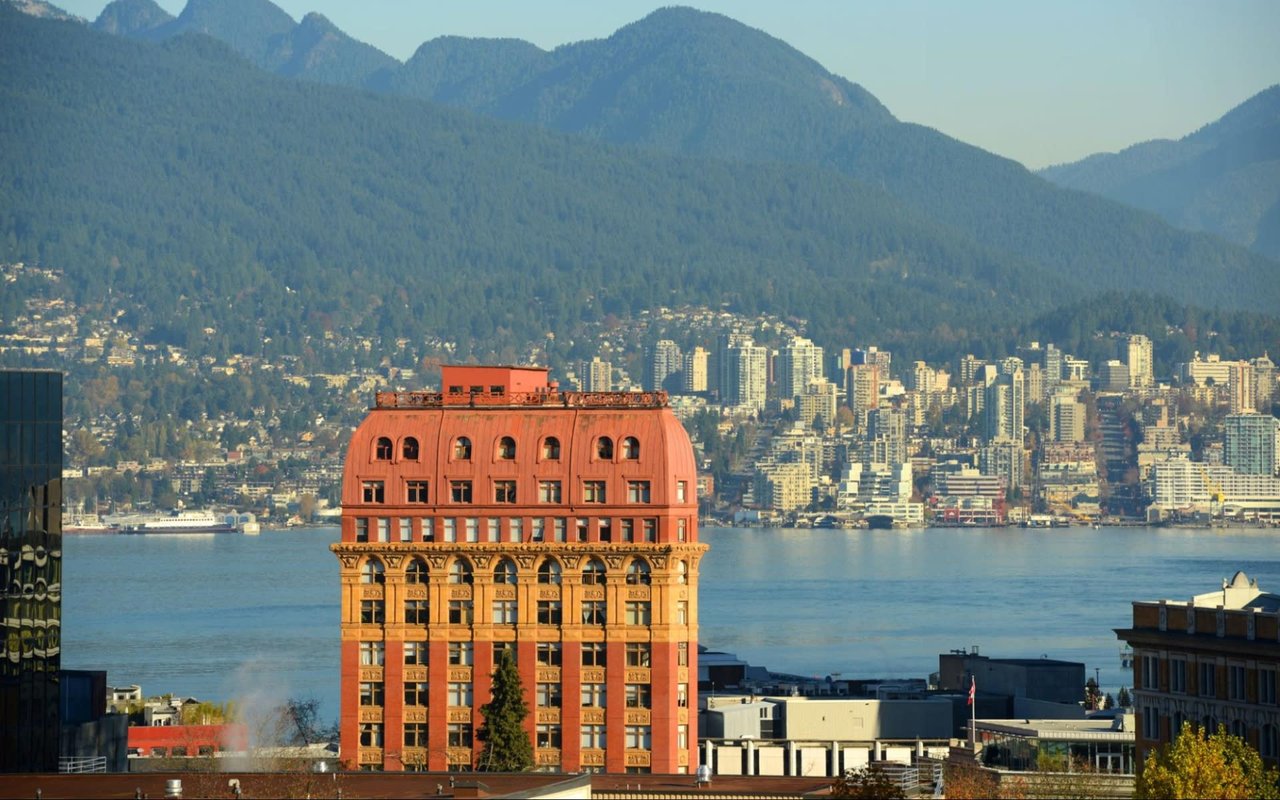
Although a captivating city of natural wonders, Vancouver's architectural heritage...
Read More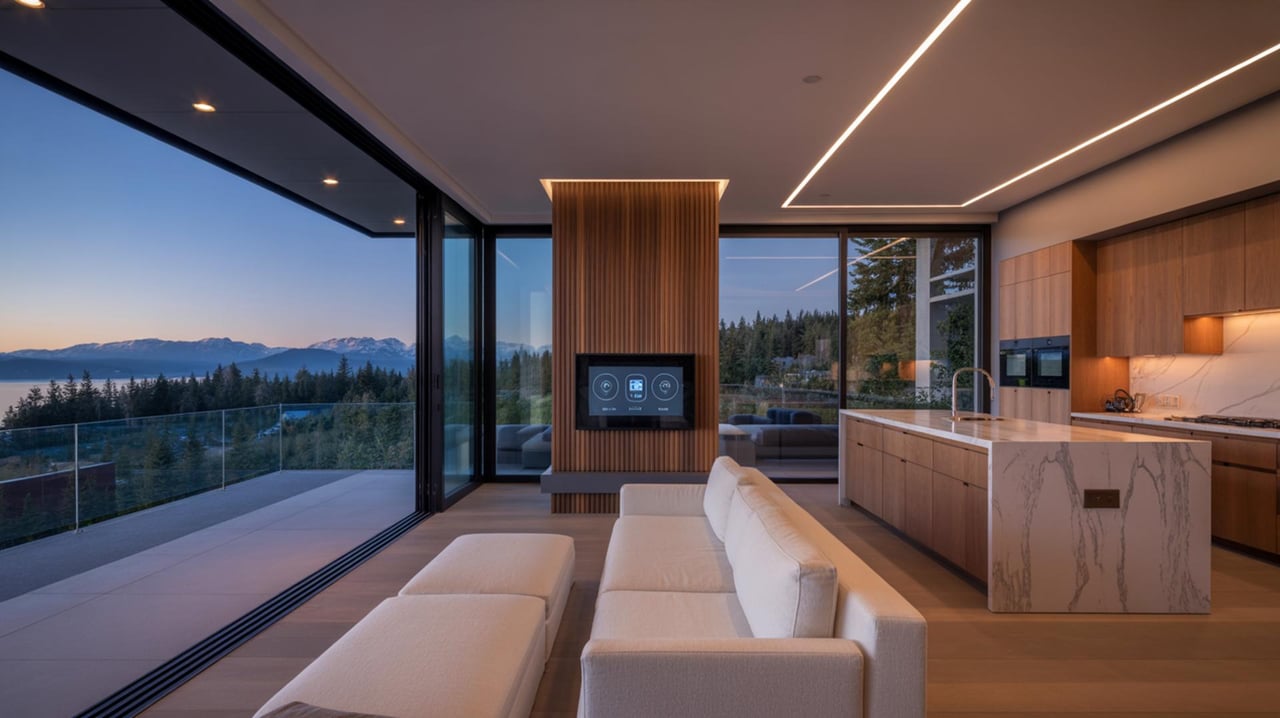
Essential Smart Home Upgrades for North Vancouver Residents
Read More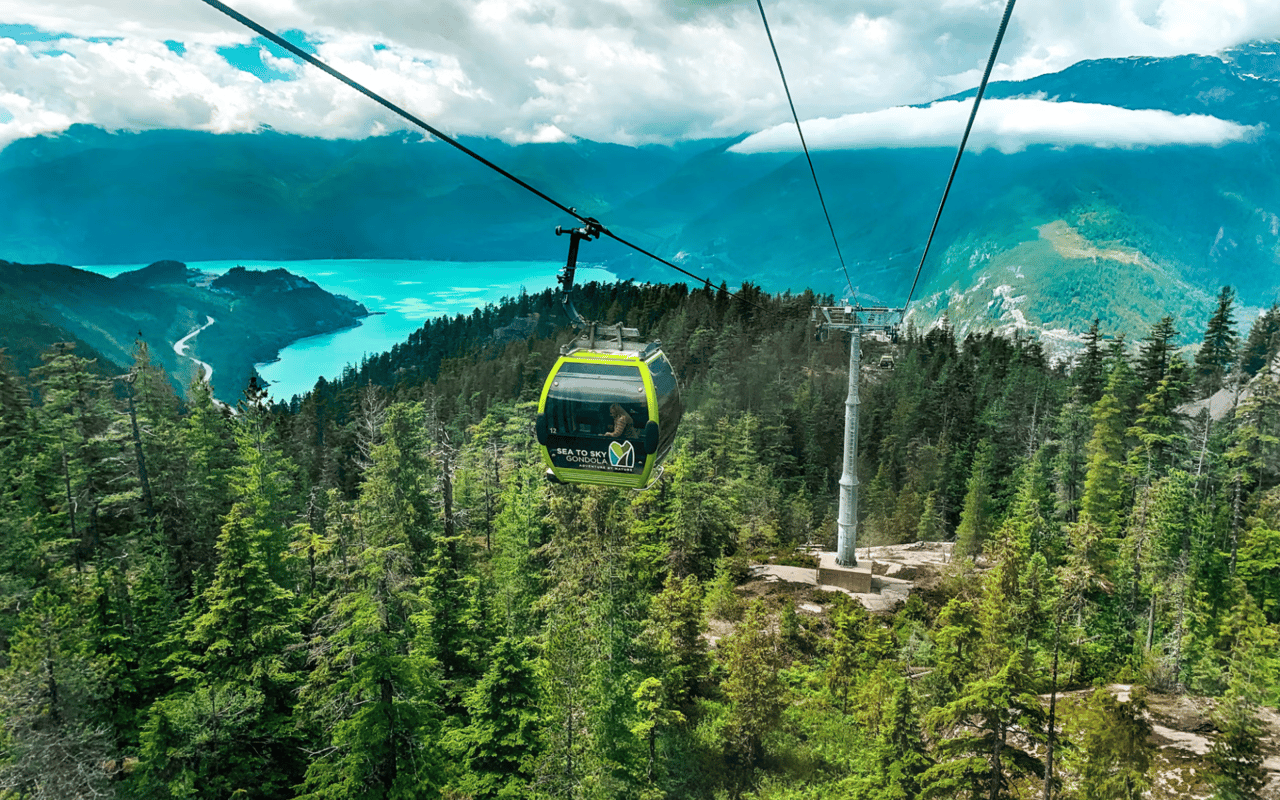
Summer is generally the best time to make these exciting day trips.
Read More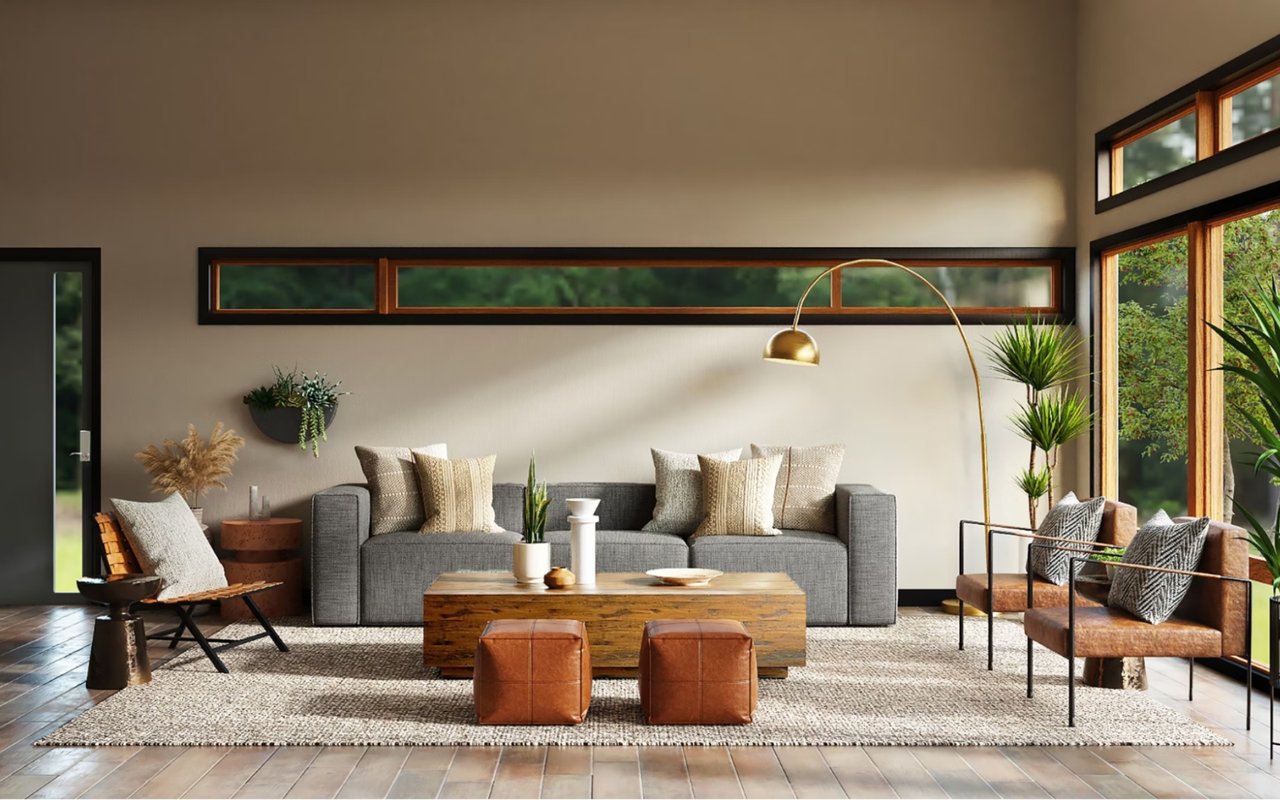
Transform Your Home with West Vancouver’s Leading Interior Design Experts.
Read More
The key to an exceptional Vancouver listing—and the lucrative sale that you want t...
Read More
Amir Miri was among the sponsors of this year's 2022 Golf for Hope Tournament in s...
Read More
Everything you need to know about buying luxury real estate.
Read More
Where to search in this vast city.
Read MoreInsightful local knowledge and extensive expertise. We looks forward to earning your family’s trust and leveraging our success for your benefit for generations to come. We looks forward to earning your family’s trust and leveraging our success for your benefit for generations to come.
Contact Us